
Corrosion Inhibitors Explained for Oil & Gas & Industry

Introduction
Corrosion is one of the most expensive and dangerous challenges facing Nigeria’s oil & gas, marine, power, and industrial sectors. From pipeline failures to storage tank degradation and cooling system damage, uncontrolled corrosion can lead to catastrophic equipment failure, environmental contamination, and costly downtime.
In Nigeria’s humid, coastal, and high-temperature environments, corrosion protection is not optional, it is essential.
One of the most effective and widely used solutions is the application of corrosion inhibitors. This article explains how corrosion inhibitors work, their industrial applications, and how products like Epochem 109 (solvent-based) and Epocool 2000 (water-based) provide reliable protection for oil & gas and industrial operations.
What Is Corrosion?
Corrosion is a natural electrochemical reaction between metals and their environment that leads to gradual deterioration.
When metals such as steel, iron, aluminum, or copper are exposed to:
- Moisture
- Oxygen
- Salts
- Chemicals
- Acidic conditions
they begin to oxidize, forming rust or other corrosion products.
Types of Corrosion Common in Oil & Gas & Industry
1. Uniform Corrosion
Even surface degradation across metal components.
2. Pitting Corrosion
Localized holes that can cause rapid structural failure.
3. Galvanic Corrosion
Occurs when dissimilar metals are in contact in the presence of an electrolyte.
4. Crevice Corrosion
Occurs in confined spaces such as flange joints.
5. Stress Corrosion Cracking
Occurs under tensile stress in corrosive environments.
In Nigeria’s oil-producing regions and coastal areas, high humidity and salt exposure significantly accelerate these corrosion mechanisms.
What Are Corrosion Inhibitors?
Corrosion inhibitors are chemical substances that:
- Reduce corrosion rate
- Form protective films
- Disrupt electrochemical reactions
- Protect metal surfaces
They can be applied as:
- Surface coatings
- Additives in water systems
- Pipeline treatment chemicals
- Storage protectants
- Cooling system inhibitors
Unlike heavy coatings alone, corrosion inhibitors can provide internal system protection where coatings are impractical.
How Corrosion Inhibitors Work
Corrosion inhibitors function through different mechanisms:
Film-Forming Protection
Products such as Epochem 109 create a thin waxy protective film that isolates metal from moisture and oxygen.
After solvent evaporation, a protective barrier remains, preventing corrosion initiation.
Anodic & Cathodic Reaction Control
In water-based systems, inhibitors like Epocool 2000 contain advanced inhibitor systems that protect metals in cooling circuits.
These inhibitors protect:
- Brass
- Copper
- Steel
- Cast iron
- Aluminum
Epochem Corrosion Inhibitor (Ep…
Types of Corrosion Inhibitors for Oil & Gas & Industry
Solvent-Based Corrosion Inhibitors
Example: Epochem 109
Epochem 109 is a solvent-based rust inhibitor that:
- Displaces water
- Leaves a thin waxy protective film
- Protects against moisture, air, detergents, and contaminants
Key Technical Characteristics:
- Amber appearance
- Specific gravity @20°C: 0.816
- Flash point: 38°C
- Film thickness: 45 µm
Application Methods:
- Dipping
- Spraying
No dilution required — used as supplied
Protection Duration:
- Indoor protection: up to 24 months
- Covered outdoor: 9–12 months
- Uncovered outdoor: up to 6 months
This makes it ideal for:
- Stored metal components
- Fabricated steel awaiting installation
- Equipment in transit
- Long-term warehouse protection
Water-Based Corrosion Inhibitors
Example: Epocool 2000
Epocool 2000 is a pre-diluted industrial coolant and corrosion inhibitor.
It is formulated for:
- Stationary engines
- Natural gas processing
- Power generation
- Marine applications
- Oilfield operations
Composition & Technology
- Extended-life carboxylate inhibitor system
- Nitrite/molybdate secondary inhibitors
- Silicate-free formula
- Phosphate-free technology
Dosage
- Recommended concentration: 7.5% volume in water
- Minimum: 5% depending on application
Key Properties:
- pH: 8.3
- Color: Bluish green
- Water content: 67% w/w
- 100% biodegradable in unused form
This makes Epocool 2000 ideal for:
- Cooling systems
- Heat transfer systems
- Diesel engines
- Mining fluid systems
- Central heating systems
Corrosion Challenges in Nigeria’s Oil & Gas Sector
Nigeria presents unique corrosion challenges:
- High humidity
- Coastal salt air
- Acidic crude
- Water injection systems
- Offshore platforms
Unprotected metal assets suffer:
- Pipeline leaks
- Storage tank corrosion
- Cooling system scaling
- Heat exchanger inefficiency
Using the correct corrosion inhibitor significantly reduces these risks.
Benefits of Using Corrosion Inhibitors
- Extends equipment lifespan
- Reduces downtim
- Minimizes maintenance cost
- Prevents environmental damage
- Improves operational safety
- Reduces capital replacement cost
For oil & gas operators, prevention is significantly cheaper than emergency repairs.
Corrosion Inhibitors vs Other Protection Methods
Corrosion protection methods include:
- Epoxy coatings
- Cathodic protection
- Galvanization
- Material upgrades
Corrosion inhibitors complement these methods by:
- Providing internal system protection
- Protecting inaccessible surfaces
- Offering temporary storage protection
For example, Epochem 109 protects metal during storage before final coating.
Choosing the Right Corrosion Inhibitor
Before selecting a corrosion inhibitor, consider:
- Type of metal
- Operating temperature
- Exposure to moisture
- Storage duration
- Internal cooling system use
- Environmental regulations
For storage protection → Solvent-based inhibitor like Epochem 109.
For cooling systems → Water-based inhibitor like Epocool 2000.
Storage & Handling Guidelines
Epochem 109
- Store between 5°C and 35°C
- Shelf life: 24 months
Epocool 2000
- Shelf life up to 8 years
- Dispose of used coolant per regulations
Proper handling ensures long-term performance.
Frequently Asked Questions
What is a corrosion inhibitor used for?
To reduce corrosion rate in metal surfaces exposed to moisture, air, chemicals, or heat.
Which corrosion inhibitor is best for pipelines?
Oil-soluble inhibitors are commonly used in pipelines. Selection depends on crude type and operating conditions.
Can corrosion inhibitors replace coatings?
No. They complement coatings but do not fully replace structural coating systems.
How long does Epochem 109 protect metal?
Up to 24 months indoors.
Is Epocool 2000 safe for cooling systems?
Yes. It protects multiple metal types including brass, copper, steel, cast iron, and aluminium.
6. Are corrosion inhibitors environmentally safe?
Epocool 2000 is biodegradable in unused form.
Conclusion
Corrosion remains one of the most significant threats to Nigeria’s oil & gas and industrial infrastructure. Effective corrosion control requires:
- Proper assessment
- Correct inhibitor selection
- Technical understanding
- Reliable supply
Products like Epochem 109 and Epocool 2000 provide tailored protection for storage, pipelines, cooling systems, and industrial equipment.
By integrating corrosion inhibitors into maintenance strategies, Nigerian industries can significantly reduce operational risks, extend asset life, and improve safety compliance.
Newest Guide & Blog Updates
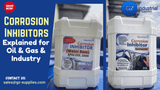
Corrosion Inhibitors Explained for Oil & Gas & Industry
Introduction Corrosion is one of the most expensive and dangerous challenges facing Nigeria’s oil &...
Lithium Grease in Nigeria: Types, Applications & Buying Guide for Industrial Use
Introduction Industrial machines, heavy equipment, vehicles, and factory systems across Nigeria depe...

Top Welding Machine Suppliers in Nigeria for Industrial Projects
Introduction Nigeria’s industrial sector continues to expand across construction, oil and gas, marin...
Welding Machines for Sale in Nigeria (2026) – Arc, Inverter & TIG Welders
Introduction In Nigeria’s fast-growing construction, fabrication, oil & gas, and maintenance sectors...

Where to Buy Epoxy Flooring Materials in Nigeria (Updated 2026 Guide)
Introduction Epoxy flooring has become a go-to solution for many industries in Nigeria due to its un...

GZ Industrial Supplies Moves Dei-Dei Abuja Showroom to Kubwa for Better Access to Contractors and Industrial Buyers
PRESS RELEASE Abuja, Nigeria – 4th January 2026 — GZ Industrial Supplies Ltd, a leading supplier of...