Top 10 Mistakes to Avoid When Operating a Crimping Machine
Crimping machines are essential equipment in hydraulic hose assembly, electrical cable termination, industrial hose fabrication, and factory maintenance processes. Whether you operate a hydraulic hose crimper, electrical lug crimper, or industrial workshop crimping unit, the quality of your crimp directly determines the performance, safety, and durability of the system.
A poor crimp can lead to:
-
Hydraulic oil leaks
-
Hose blowouts under pressure
-
Electrical failure or overheating
-
Machine downtime
-
Serious workplace safety incidents
To help technicians and engineering teams avoid costly mistakes, GZ Industrial Supplies presents the top 10 mistakes to avoid when operating a crimping machine along with practical guidance for better crimping results. Check out the mistakes below;
Using the Wrong Die Set
This is the most common mistake operators make. Each hose and fitting combination requires a specific die size, and using the wrong die leads to:
-
Under-crimping → weak joints that leak under pressure
-
Over-crimping → fittings damaged or cracked
-
Slippage or hose pull-out during operation
Why it happens:
Many operators try to “match by eye” instead of checking the crimp chart.
Correct approach:
-
Always use the die set recommended for the exact hose model and fitting brand.
-
Verify using the manufacturer’s crimp chart or GZ Industrial Supplies technical guide.
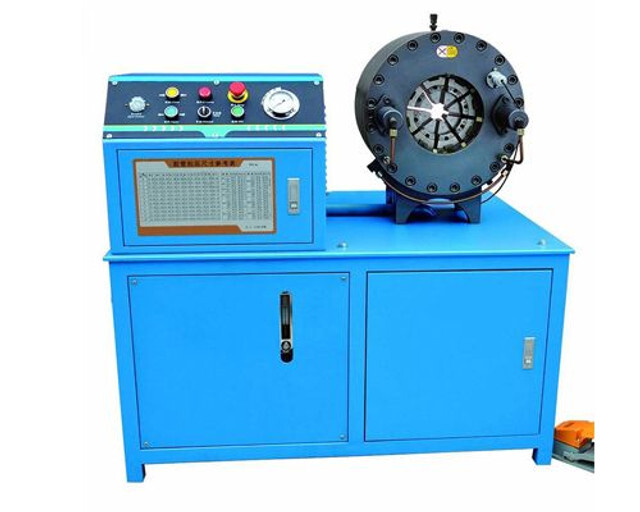
Hydraulic Hose crimping machine YMC 102
Incorrect Hose and Fitting Selection
A high-quality crimp can only be achieved when the hose, fitting, and die are fully compatible. Mixing different brands, pressure ratings, or hose types often leads to:
-
Mismatched crimp diameters
-
Weak or uneven crimping
-
Structural failure under pressure
Examples of bad pairing:
-
Using a 2-wire hose with a fitting designed for 4-wire
-
Using fittings from a different manufacturer
-
Choosing hoses not rated for the application environment
Skipping Proper Hose Measurement and Marking
Every hose assembly must be measured accurately before crimping. Cutting too long or too short affects the final system layout and may compromise performance.
Critical step many skip:
Marking insertion depth — the exact point where the fitting must seat inside the hose.
If insertion depth is not marked:
-
The fitting may not sit deep enough → causing blowouts.
-
The hose may twist during crimping → weakening the connection.
Correct approach:
-
Measure with a calibrated hose measuring tool.
-
Mark insertion depth clearly before placing into the crimp head.
Poor Hose Preparation
A clean, properly prepared hose ensures a perfect crimp. Poor preparation includes:
-
Leaving debris, rubber particles, or wire ends inside the hose
-
Not cleaning after cutting
-
Using a dull cutting blade
-
Not lubricating the fitting insert when required
Consequences:
-
Contamination enters the hydraulic system
-
Hose reinforcement is damaged
-
Crimp does not seat uniformly
At GZ, we advise operators to use professional hose cutting saws and compressed air cleaning before assembly.
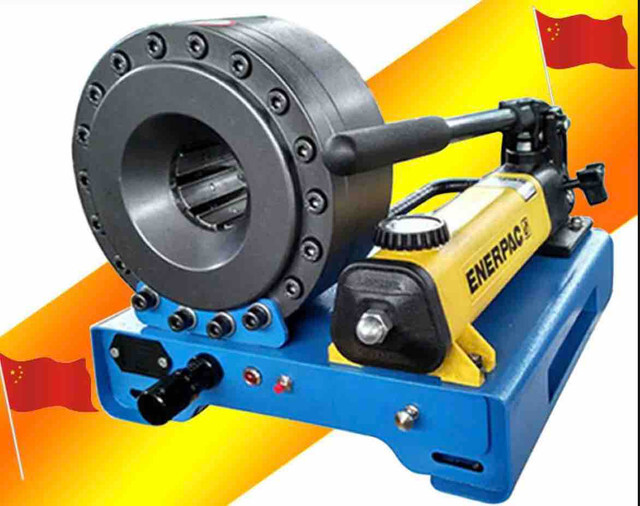
Hydraulic Hose crimping machine PM16
Incorrect Crimp Diameter
Even with the correct die, operators may produce a wrong crimp diameter if they fail to measure the final crimp.
A wrong crimp diameter leads to:
-
Leaks during pressure spikes
-
Hose ends pulling out
-
Over-compressed hose reinforcement
Correct approach:
-
Use a crimp OD caliper to measure the final diameter
-
Compare with the manufacturer’s specified tolerance
-
Never rely on visual inspection alone
GZ Industrial Supplies provides calibrated measuring tools to help technicians verify each crimp.
Ignoring Machine Calibration
A crimping machine must be calibrated regularly to maintain accuracy. When calibration is off—even slightly—the machine produces crimps that are outside specification.
Consequences of poor calibration:
-
Every crimp becomes inconsistent
-
Crimp diameters drift over time
-
High risk of batch failures during pressure testing
Why calibration drifts:
-
Natural wear of crimping dies
-
Hydraulic pressure variation
-
Long-term usage without servicing
Correct approach:
-
Follow the manufacturer’s calibration schedule
-
Perform semi-annual calibration checks
-
Replace worn dies and damaged crimp heads
-
Request GZ Industrial Supplies calibration support services when needed
A well-calibrated machine ensures consistent results across hundreds of hose assemblies.
Operating the Machine at the Wrong Pressure
Each crimping machine is designed to operate at a specific hydraulic pressure, ensuring uniform compression. Running at low or excessive pressure leads to poor crimp integrity.
If pressure is too low:
-
Crimp does not tighten fully
-
Fittings may slip off
-
Hose fails during high-pressure operation
If pressure is too high:
-
Over-crimping damages fittings
-
Reinforcement wires crush and break
-
Increased risk of hose bursting
Correct approach:
-
Always verify machine pressure before starting a job
-
Inspect the hydraulic pump and fluid level
-
Replace seals or pressure regulators showing wear
GZ Industrial Supplies offers hydraulic pressure gauges, pumps, and service kits to maintain optimal machine performance.
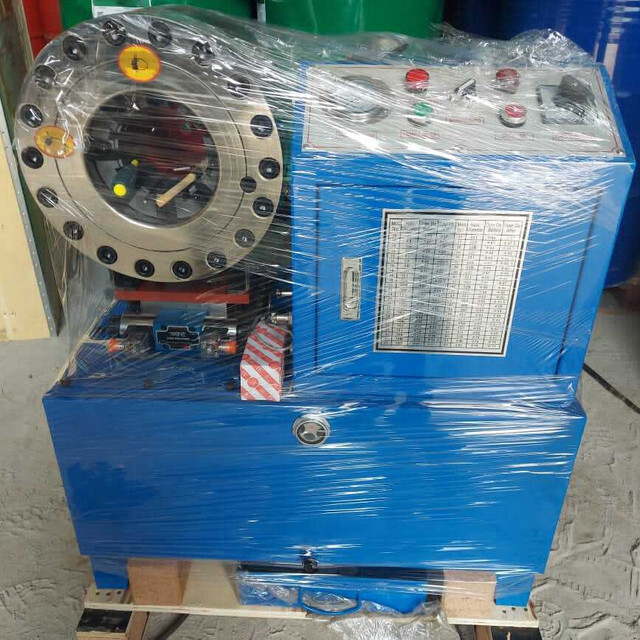
Hydraulic Hose Crimping Machine 220V DX68 KAIDA
Poor Alignment of Hose and Fitting
Even if the correct die and pressure are used, misalignment during crimping leads to a defective assembly.
Symptoms of misalignment:
-
Crimp marks are uneven
-
One side of the fitting compresses more than the other
-
Hose becomes twisted or stressed
Results of misalignment:
-
Premature failure under pressure
-
Reduced burst rating
-
Fitting fatigue and cracking
Correct approach:
-
Ensure hose and fitting sit straight in the crimp head
-
Use alignment guides when available
-
Do not force a bent hose into the machine
Proper alignment ensures that compression is even throughout the fitting circumference.
Not Inspecting the Finished Crimp
A crimp is not complete until it is inspected. Skipping inspection is a major cause of field failures.
What operators should inspect:
-
Crimp OD measurement using a precision caliper
-
Smooth and even crimp pattern
-
No cracks, pinching, or bulging
-
Proper insertion depth visible after crimp
-
No exposed reinforcement wires
For high-pressure hydraulic systems, using a Go/No-Go gauge is strongly recommended.
Correct approach:
-
Document crimp diameter for quality control
-
Inspect every batch before sending hoses to the field
-
Reject any hose assembly that fails visual or dimensional checks
GZ Industrial Supplies offers quality inspection kits for hose assembly workshops.
Ignoring Machine Maintenance
Lack of maintenance is one of the main reasons crimping machines lose accuracy or fail completely.
Common maintenance issues:
-
Dirty dies that accumulate metal and rubber debris
-
Worn hydraulic seals
-
Low hydraulic oil levels
-
Unlubricated machine components
-
Loose bolts and alignment pins
Consequences of poor maintenance:
-
Inconsistent crimps
-
Machine overheating
-
Expensive long-term repairs
-
Safety risks for operators
Correct approach:
-
Clean dies after every batch
-
Lubricate moving parts weekly
-
Replace hydraulic oil as recommended
-
Check calibration and pressure settings regularly
GZ Industrial Supplies provides maintenance consumables, replacement parts, and technical service for crimping machines of all sizes.
Additional Common Mistakes (Often Overlooked by Operators)
While the top 10 mistakes are the most frequent, several additional errors also compromise the quality and safety of crimped assemblies:
Skipping Operator Training
Even experienced technicians benefit from periodic training. New crimping machines, die sets, and hose technologies require updated knowledge.
GZ Industrial Supplies offers operator orientation and technical support upon request.
Using Counterfeit or Low-Quality Fittings
Cheap fittings may not match standard crimp charts, resulting in dangerous failures.
Always source original fittings and hoses from reputable suppliers.
Operating in Dirty Work Environments
Dust, metal shavings, and oil contamination can enter the hose or damage the machine.
A clean workspace = safer, stronger crimps.
Relying on “Experience” Instead of Specifications
Visual judgment is not a substitute for:
-
Crimp charts
-
Calipers
-
Machine calibration
-
Proper die selection
Precision, not assumption, prevents system failures.
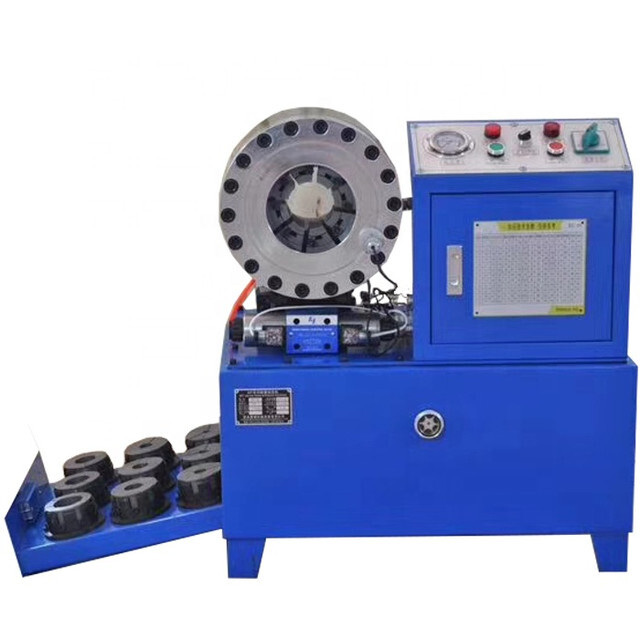
Hydraulic Hose Crimping Machine 800W DF68 KAIDA
Best Practices for Safe and Effective Crimping
To ensure reliability and maximize hose lifespan, follow these industry best practices:
Follow Manufacturer Crimp Charts
Each hose brand and fitting model has specific crimp dimensions. Never guess.
Use Only Compatible Hose–Fitting Systems
Mixing brands increases the chance of incorrect seating and diameter mismatch.
Keep the Crimping Machine Clean and Calibrated
Dirt affects die movement, while calibration affects uniformity.
Document and Inspect Every Crimp
For quality control, especially in oil & gas, construction, or manufacturing sectors.
Maintain a Proper Workspace
Good lighting, clean floors, and organized dies reduce operational errors.
Train New Operators Regularly
Even minor mistakes can lead to major safety issues in high-pressure systems.
Essential Tools and Accessories Every Crimping Operator Should Use
| Tool / Accessory | Purpose |
|---|---|
| Crimp OD Caliper | Measures final crimp diameter accurately |
| Insertion Depth Marker | Ensures fittings are seated correctly |
| Hose Cutting Saw | Makes clean, debris-free cuts |
| Die Cleaning Brush | Prevents contamination in die cavities |
| Go/No-Go Gauge | Confirms accuracy of critical crimps |
| Hydraulic Pressure Gauge | Ensures machine pressure is correct |
| Protective PPE | Safety for operators (gloves, goggles) |
GZ Industrial Supplies stocks all required accessories and replacement parts for professional crimping operations.
Why Choose GZ Industrial Supplies for Your Crimping Machines & Tools?
GZ Industrial Supplies is one of the largest distributors of industrial tools, hydraulic hose fittings, and crimping equipment in Nigeria. Customers trust us because:
Wide Range of Crimping Machines
Hydraulic, electric, workshop, and portable crimpers for all applications.
Certified, High-Quality Hoses and Fittings
Compatible with major brands and compliant with global standards.
Technical Expertise and Support
Our team provides installation guidance, calibration support, and operator training.
Nationwide Delivery
Fast, reliable supply to Lagos, Port Harcourt, Abuja, Kano, and all major cities.
Competitive Pricing
Affordable for workshops, factories, and industrial plants.
Genuine Replacement Parts
Dies, hose fittings, ferrules, hydraulic pumps, and maintenance kits.
Whether you're a workshop technician, maintenance engineer, or procurement manager, GZ Industrial Supplies ensures you get the right equipment, the right tools, and the right support.
Related Article
Hydraulic Hose Crimping Machines: Types, Applications, and Best Practices
Conclusion
Crimping machines are powerful and essential tools across hydraulic, industrial, and electrical applications. But to achieve safe, reliable, and long-lasting results, operators must avoid the common mistakes outlined in this guide. Proper die selection, hose preparation, machine calibration, accurate measurement, and consistent inspection make all the difference.
By following these best practices and partnering with a trusted supplier like GZ Industrial Supplies technicians can significantly reduce equipment downtime, prevent leaks and blowouts, and ensure high-performance hose assemblies.
Looking for crimping machines, dies, hoses, fittings, or technical support?
Call: +234 8053390129
Email: sales@gz-supplies.com
Newest Guide & Blog Updates
GZ Industrial Supplies Moves Dei-Dei Abuja Showroom to Kubwa for Better Access to Contractors and Industrial Buyers
PRESS RELEASE Abuja, Nigeria – 4th January 2026 — GZ Industrial Supplies Ltd, a leading supplier of...
Top 10 Power Tools Every Workshop in Nigeria Needs in 2026
Introduction In 2026, Nigerian workshops from car repair garages in Lagos to metal fabrication shops...
Power Tools for Construction Sites: What to Buy and Why
Introduction: Why the Right Power Tools Matter on Construction Sites Construction sites are tough en...
Epochem 109 vs Epocool 2000: Which Corrosion Inhibitor Is Right for Your Industrial Application?
Introduction Corrosion remains one of the most costly challenges in industrial operations, leading t...
Drill Machine Price in Nigeria (Types & Best Brands)
Introduction Drill machines are among the most essential power tools used across Nigeria’s construct...
Predictive Maintenance for Industrial Fleets
At 2:17 a.m., a fully loaded logistics truck broke down on a remote highway not because it hadn’t be...