
Arc Welding Machines Explained
Introduction
Arc welding remains one of the most widely used metal-joining techniques in fabrication, construction, automotive repair, oil & gas, shipbuilding, pipeline work, and maintenance operations. From small workshops to heavy industrial production lines, arc welding machines are the backbone of metal fabrication — creating secure, durable joints capable of withstanding stress, vibration, corrosion, and extreme operating conditions.
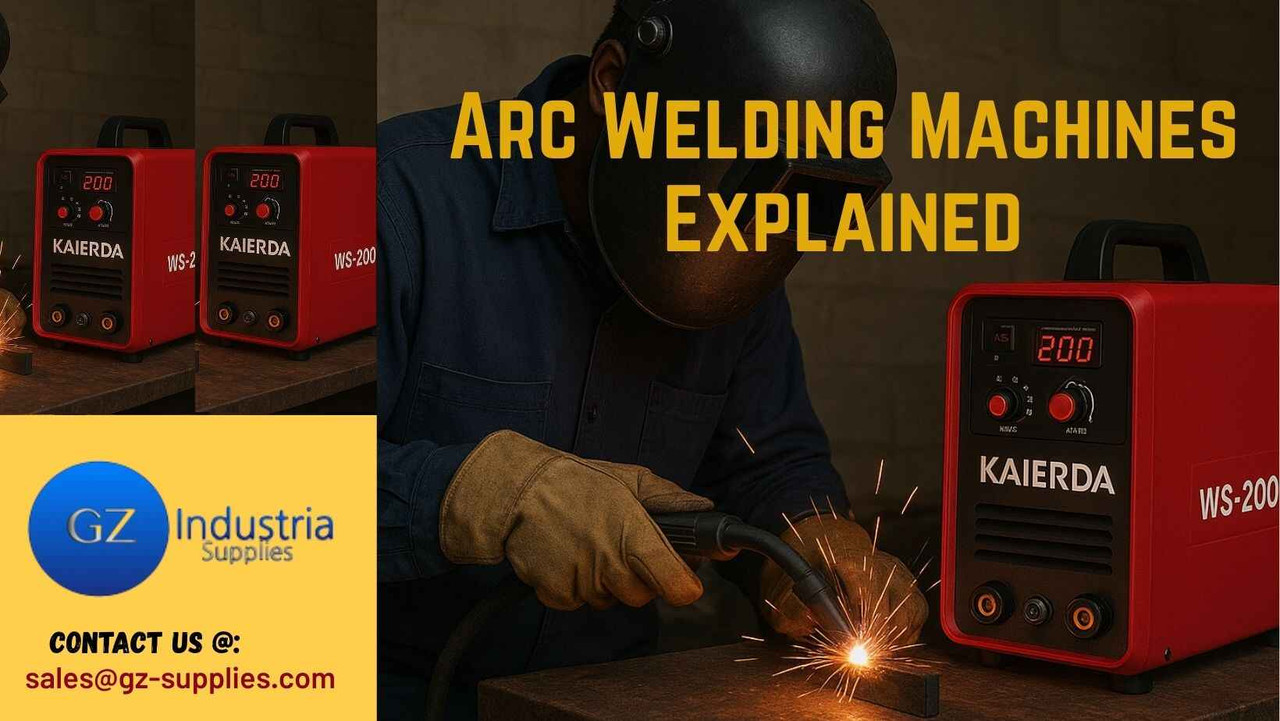
In practical terms, an arc welding machine is an electric power source that generates an arc between an electrode and a metal workpiece, producing intense heat that melts and fuses the materials together. Although the concept sounds simple, differences in power source, welding process, shielding requirements, and machine features determine weld quality, productivity, safety, and operating cost.
Key Takeaway: Arc welding machines are not “one-size-fits-all.” Understanding how they work and how each type differs is the key to selecting the right welder for the material, project type, and skill level.
How Arc Welding Machines Work
All arc welding machines follow the same foundational process: electricity → arc → heat → fusion.
Power Source
The machine converts input power (AC or DC) into a controlled output current. The type of current influences the weld’s stability, penetration depth, bead appearance, and ability to weld different metals.
Electrode and Arc Formation
When the electrode (wire, rod, or tungsten) approaches the base metal, an electric arc is formed. This arc can reach temperatures of up to 6,500°F (≈3,600°C) — hot enough to melt almost any metal.
Shielding the Weld Pool
To prevent atmospheric contamination, the weld pool needs protection using:
- Shielding gas (as in MIG/TIG welding)
- Flux coating (as in Stick welding)
- Flux-filled wire (as in Flux-core welding)
Without shielding, oxygen and moisture will cause porosity, weak welds, and cracking.
Polarity Settings (AC vs DC)
- DC Electrode Positive (DCEP / reverse polarity): deeper penetration
- DC Electrode Negative (DCEN / straight polarity): shallower penetration, faster deposition
- AC: used for specific applications like AC TIG on aluminum
Each polarity provides advantages depending on the metal thickness and welding process.
Types of Arc Welding Machines
Arc welding machines are available in several process-specific models. Selecting the right one depends on the type of work, material thickness, portability needs, and weld appearance requirements.
Stick Welders (SMAW)
Stick welding machines use a consumable coated electrode to create the arc and shielding effect.
- Best for: outdoor welding, structural steel, heavy fabrication, repairs
- Advantages: affordable, works in wind and dirty environments
- Limitations: more spatter, slower than MIG on production jobs
- Skill Level: beginner to advanced
This is the most common machine for construction sites and pipeline welding across Nigeria and West Africa.
MIG Welding Machines (GMAW)
MIG welders use a continuously fed wire electrode and shielding gas to create a clean, continuous weld.
- Best for: fabrication shops, automotive repair, gate/steel door production, manufacturing
- Advantages: fast, clean welds with minimal spatter, ideal for mild steel and stainless
- Limitations: shielding gas is wind-sensitive (indoor use preferred)
- Skill Level: beginner-friendly and highly productive
MIG welders are the preferred machines for mass production and high-output fabrication.
TIG Welding Machines (GTAW)
TIG welders use a non-consumable tungsten electrode and filler rod (depending on technique), producing extremely precise and clean welds.
- Best for: aluminum, stainless steel, thin metals, decorative and high-precision welding
- Advantages: the highest weld quality and control; no spatter
- Limitations: slower process, requires trained operator
- Skill Level: intermediate to professional
TIG machines are widely used in food-grade fabrication, medical equipment, exhaust systems, aviation, and high-finish stainless projects.
Multi-Process Welding Machines
Multi-process welders combine MIG + TIG + Stick capabilities in one unit.
- Best for: workshops, training centers, mobile welders, repair services
- Advantages: cost-efficient and versatile — one machine covers multiple jobs
- Limitations: depends on build quality; duty cycle varies by machine
- Skill Level: beginner to expert depending on process
They are ideal for customers who want maximum flexibility without buying multiple machines.
Key Features to Compare When Buying Arc Welding Machines
Whether for fabrication, maintenance, or construction, selecting the right welding machine has a major impact on performance, long-term maintenance cost, and weld output. The following are the most important features to evaluate before purchasing:
Amperage Range
Determines the thickness of metal you can weld.
Higher amperage = ability to weld thicker materials.
Tip: Look for machines that don’t struggle at high amperage — they last longer.
Duty Cycle
Shows how long the machine can weld continuously before requiring cooldown.
- 20–40% = light/occasional use
- 40–60% = regular workshop use
- 60–100% = industrial production welding
A higher duty cycle improves productivity during long runs.
Input Voltage
- 110–120V = DIY / light workshop use
- 220–240V = standard professional shop
- 380–415V (3-phase) = manufacturing and heavy industry
Dual-voltage machines offer flexibility for mobile welders.
Material Compatibility
Some machines weld mild steel only, while others support:
- Stainless steel
- Aluminum
- Cast iron
- Copper alloys
TIG and certain MIG machines offer the best compatibility across materials.
Controls & Technology
Modern welding machines now include:
- Digital displays
- Auto-set modes
- Hot start / arc force / anti-stick
- Synergic MIG programs
- Memory presets for jobs or materials
These features help reduce setup mistakes and support beginners.
Accessories & Expandability
Check for compatibility with:
- Foot pedal (TIG)
- Spool gun (aluminum MIG)
- Wire feeder units
- Gas solenoid valve
- Remote amperage controls
Buying expandable equipment prevents expensive upgrades later.
Portability
For field welders and repairs, compact machines with shoulder straps or trolleys offer huge convenience.
For fabrication shops, weight is less important than output and duty cycle.
Arc Welding Machine Applications by Industry
The ideal machine depends heavily on the intended work. Below is a breakdown by sector:
|
Industry / Sector |
Best Machine Type |
Reason |
|
Automotive, exhaust, body shops |
MIG / Multi-Process |
Fast, clean welding of thin metals |
|
Oil & Gas, Pipeline, Tank Fabrication |
Stick / Engine-Driven |
Strong welds in outdoor conditions |
|
Structural Steel & Gate Fabrication |
MIG / Stick |
Fast production & deep penetration |
|
Stainless & Aluminum Fabrication |
TIG |
Highest precision & heat control |
|
Shipbuilding & Marine |
MIG / Flux-Core |
High deposition rate & tolerance to outdoor conditions |
|
Manufacturing Workshops |
MIG / TIG |
Production volume & quality requirements |
|
Maintenance & Repair |
Stick / Multi-Process |
Versatile and low-maintenance machines |
Safety Tips When Operating Arc Welding Machines
Arc welding produces heat, sparks, fumes, and UV radiation — proper safety procedures protect welders and their environment.
PPE Required
- Auto-darkening welding helmet
- Fire-resistant welding gloves & jacket
- Leather boots (no synthetic footwear)
- Protective apron for heavy work
Ventilation & Fume Extraction
Welding fumes contain particles from molten metal and coatings. Use:
- Ventilation fans
- Fume extractors
- Respirators when welding in tight spaces
Fire & Workspace Safety
- Remove flammables within 10-meter radius
- Keep fire extinguisher nearby
- Inspect cables for exposed copper
- Avoid welding near fuel, solvents, or gas leaks
Electrical Safety
- Always ground the workpiece
- Never weld in wet conditions
- Inspect cable insulation regularly
- Do not modify plugs or add makeshift connectors
Common Beginner Mistakes to Avoid
- Welding without cleaning the metal
- Incorrect polarity settings
- Too long or too short arc length
- High voltage causing spatter
- Low amps causing sticking
Mastering safety ensures better weld quality and reduces downtime due to injury or equipment damage.
Pros & Cons of Arc Welding Machines
Every welding process has benefits and limitations — knowing both helps welders select the right equipment for each job.
Benefits
- Strong structural welds
- Works on most commercial metals
- Machines available for every budget
- Simple power requirement (especially Stick machines)
- Portable options for remote and field work
Limitations
- Requires training and practice for good results
- Spatter cleaning and slag removal (depending on process)
- Heat distortion risk on thin materials (if incorrect settings)
- Shielding gas dependency for indoor MIG/TIG welding
Troubleshooting Common Welding Machine Problems
|
Problem |
Possible Cause |
Quick Solution |
|
Electrode keeps sticking |
Amperage too low |
Increase amperage or shorten arc |
|
Porosity / holes in weld |
Contaminated metal / gas issue |
Clean metal / adjust gas flow |
|
Excessive spatter |
Voltage too high / long arc |
Reduce voltage / shorten arc |
|
Wire not feeding (MIG) |
Liner worn / tension too high |
Replace liner / reduce tension |
|
Arc unstable |
Bad ground clamp / loose connection |
Inspect and tighten cables |
|
Weak penetration |
Too low heat or wrong polarity |
Increase amps / switch polarity |
Recommended Arc Welding Machines & Accessories (Available at GZ Industrial Supplies)
GZ Industrial Supplies stocks a wide range of professional welding machines for workshops, fabrication yards, construction companies, shipyards, and maintenance teams across Nigeria. Whether you're looking for a beginner-friendly unit or heavy-duty industrial welding equipment, we have options across every welding process.
Top Welding Machine Options
|
Welding Need |
Recommended Machine Type |
Why |
|
Gate & structural steel fabrication |
MIG Welding Machine |
High deposition rate and speed for thick and mild steel |
|
Automotive repairs & exhaust pipes |
Multi-Process or MIG |
Works well with thin metal and sheet work |
|
Stainless steel & aluminum |
TIG Welding Machine |
Highest accuracy and finish quality |
|
Outdoor welding, tanks & pipelines |
Stick / Engine-Driven Welder |
Works well in wind and harsh environments |
|
Workshop repairs & multi-material use |
Multi-Process |
One machine for many welding scenarios |
Why Buy Welding Machines from GZ Industrial Supplies
- 100% original industrial-grade machines
- Available in 110V / 220V / 380V / 415V
- Full warranty support
- Fast delivery nationwide
- Stock of welding consumables & accessories including:
- Welding electrodes
- MIG wire
- Tungsten rods
- Gas regulators and hoses
- Auto-darkening welding helmets
- Welding PPE and respirators
- Abrasives and grinding discs
GZ is a one-stop destination for welding equipment + spare parts + consumables, fully stocked for both small workshops and heavy industries.
Frequently Asked Questions (FAQs)
Which welding machine is best for beginners?
A MIG or multi-process machine is best for beginners because it is easy to operate and requires less technique than TIG or Stick.
What machine should I choose for stainless and aluminum fabrication?
A TIG welding machine offers the heat control and precision required for aluminum and stainless steel without distortion.
Can a MIG welder be used outdoors?
Yes — but to avoid gas interference from the wind, flux-core MIG wire or gasless MIG is recommended.
What is the difference between 220V and 380V machines?
- 220V: workshops, general fabrication
- 380V/415V (3-phase): heavy-duty industrial welding and long production cycles
Do you offer training or machine setup support?
Yes. Our technical team helps customers with machine selection, setup, and safe operation guidance upon request.
Conclusion
Arc welding machines are the heart of metal fabrication — and choosing the right one determines weld quality, productivity, material compatibility, and operator safety. Understanding the differences between Stick, MIG, TIG, and Multi-Process welders helps welders, workshop owners, and industrial buyers select equipment that aligns with their current and future needs.
Whether you're welding mild steel, stainless steel, or aluminum — indoors, outdoors, or on production lines — GZ Industrial Supplies offers reliable and industry-trusted welding machines and consumables to keep your operations running smoothly.
Newest Guide & Blog Updates

Comprehensive Guide to OX Fan Prices and Performance (2026 Update)
Introduction In Nigeria’s hot climate, a reliable fan is more than just a convenience, it’s a necess...
Industrial Safety Equipment Checklist for Nigerian Workshops
Introduction Industrial workshops across Nigeria from welding and fabrication shops to mechanical re...
Corrosion Inhibitors Explained for Oil & Gas Industry
Introduction Corrosion is one of the most expensive and dangerous challenges facing Nigeria’s oil &...
Lithium Grease in Nigeria: Types, Applications & Buying Guide for Industrial Use
Introduction Industrial machines, heavy equipment, vehicles, and factory systems across Nigeria depe...
Top Welding Machine Suppliers in Nigeria for Industrial Projects
Introduction Nigeria’s industrial sector continues to expand across construction, oil and gas, marin...
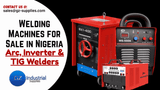
Welding Machines for Sale in Nigeria (2026) – Arc, Inverter & TIG Welders
Introduction In Nigeria’s fast-growing construction, fabrication, oil & gas, and maintenance sectors...