
Epochem 109 vs Epocool 2000: Which Corrosion Inhibitor Is Right for Your Industrial Application?
Introduction
Corrosion remains one of the most costly challenges in industrial operations, leading to equipment failure, safety risks, downtime, and expensive replacements. While corrosion inhibitors are designed to protect metal surfaces, not all inhibitors perform the same function or serve the same application.
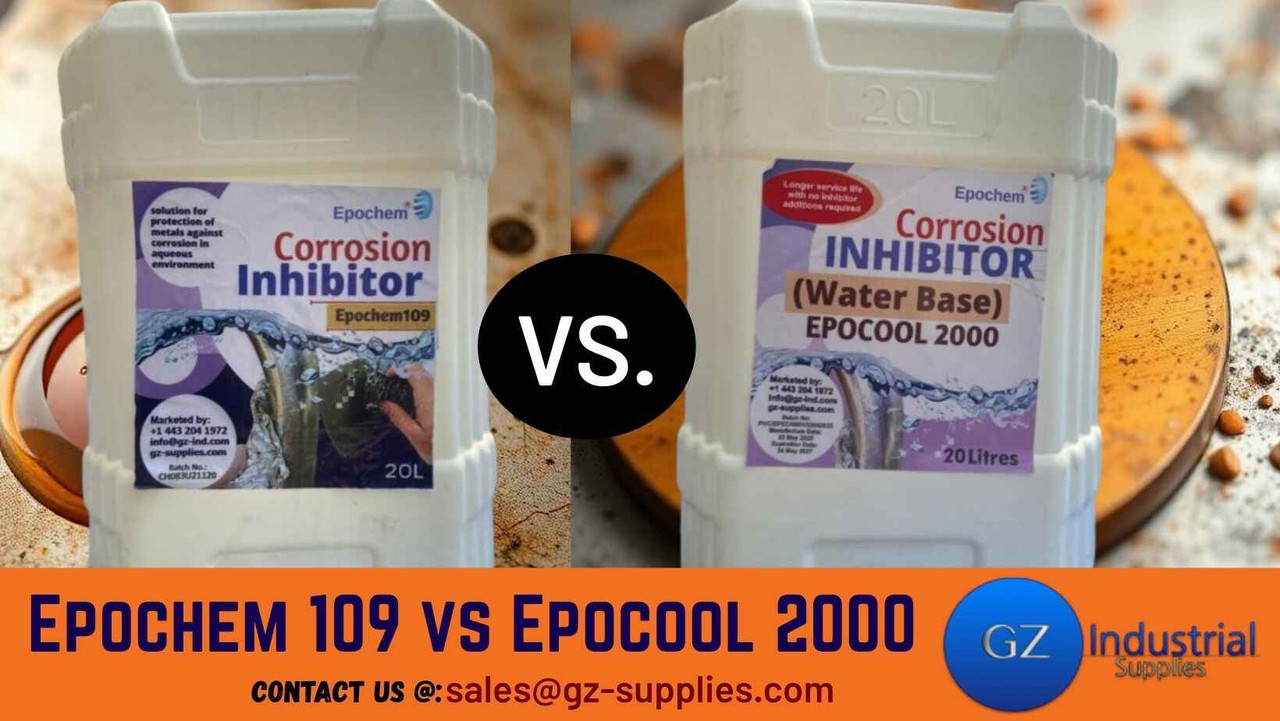
Two commonly used industrial corrosion inhibitors Epochem 109 and Epocool 2000 are often mistaken as interchangeable. In reality, they are engineered for completely different environments and protection mechanisms.
This guide explains the key differences between Epochem 109 and Epocool 2000, how each product works, where each should be used, and how to select the right inhibitor for your application.

Why Choosing the Right Corrosion Inhibitor Matters
Using the wrong corrosion inhibitor can be worse than using none at all. An incorrect product may:
-
Fail to protect critical metal surfaces
-
Trap moisture and accelerate corrosion
-
Damage seals, pumps, or cooling systems
-
Increase maintenance and replacement costs
Understanding whether you need surface protection or internal system protection is the first step toward making the right choice.
Overview of Epochem 109 Corrosion Inhibitor
Product Type
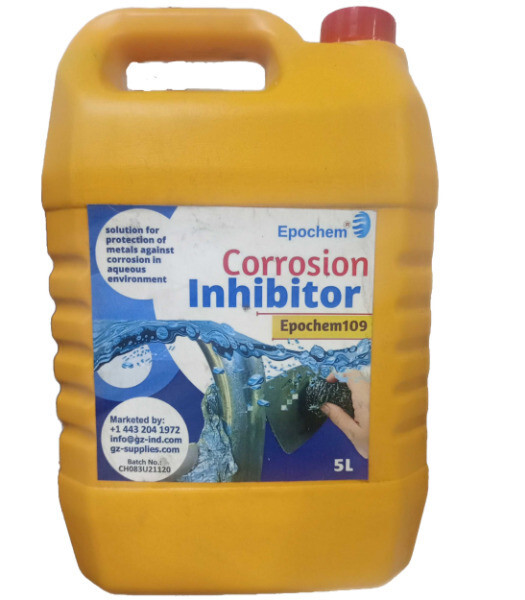
Epochem 109 is a solvent-based, water-displacing corrosion inhibitor designed to protect exposed metal surfaces.
How Epochem 109 Works
Epochem 109 works by:
-
Displacing moisture from metal surfaces
-
Leaving behind a thin waxy protective film
-
Preventing contact between metal, oxygen, and corrosive contaminants
Once applied, the solvent evaporates, leaving a dry, non-sticky protective layer that shields the metal from rust and oxidation.
Typical Applications of Epochem 109
Epochem 109 is ideal for:
-
Fabricated steel and metal components
-
Machined parts
-
Tools and equipment in storage
-
Metal parts awaiting installation
-
Shipping and warehousing protection
-
Indoor and outdoor covered storage
Key Benefits of Epochem 109
-
Long-term indoor protection (up to 24 months)
-
Outdoor covered protection (9–12 months)
-
Protects against humidity, detergents, and fingerprints
-
Easily removable with alkaline or solvent cleaners
-
Leaves a clean, dry waxy film
Epochem 109 is not designed for internal system circulation or cooling systems.
Overview of Epocool 2000 Corrosion Inhibitor
Product Type
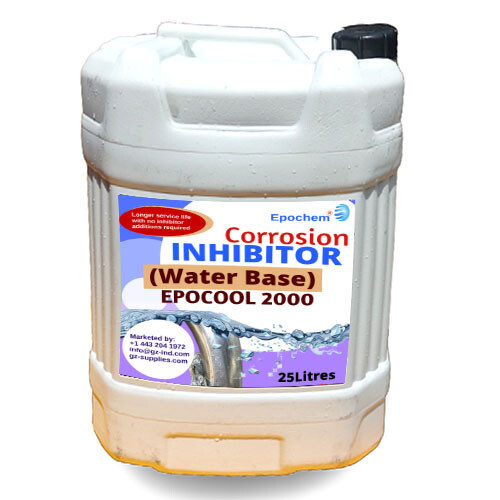
Epocool 2000 is a water-based corrosion inhibitor and industrial coolant, formulated for use in closed-loop systems and cooling circuits.
How Epocool 2000 Works
Epocool 2000:
-
Is mixed with water and circulated through systems
-
Protects internal metal surfaces from corrosion
-
Prevents scale formation and deposit buildup
-
Maintains heat transfer efficiency
It uses a modern carboxylate inhibitor system, making it suitable for long-term operational use.
Typical Applications of Epocool 2000
Epocool 2000 is designed for:
-
Stationary engines
-
Diesel engines (on-road and off-road)
-
Power generation equipment
-
Heat exchangers
-
Central heating systems
-
Hydraulic safety fluids
-
Mining and industrial cooling systems
Key Benefits of Epocool 2000
-
Protects steel, cast iron, copper, brass, and aluminum
-
Phosphate-free and silicate-free formulation
-
Compatible with hard water
-
Low dissolved solids
-
Long service life
-
Biodegradable in unused form
-
Shelf life of up to 8 years
Epocool 2000 does not form a surface coating and is not suitable for exposed metal storage.
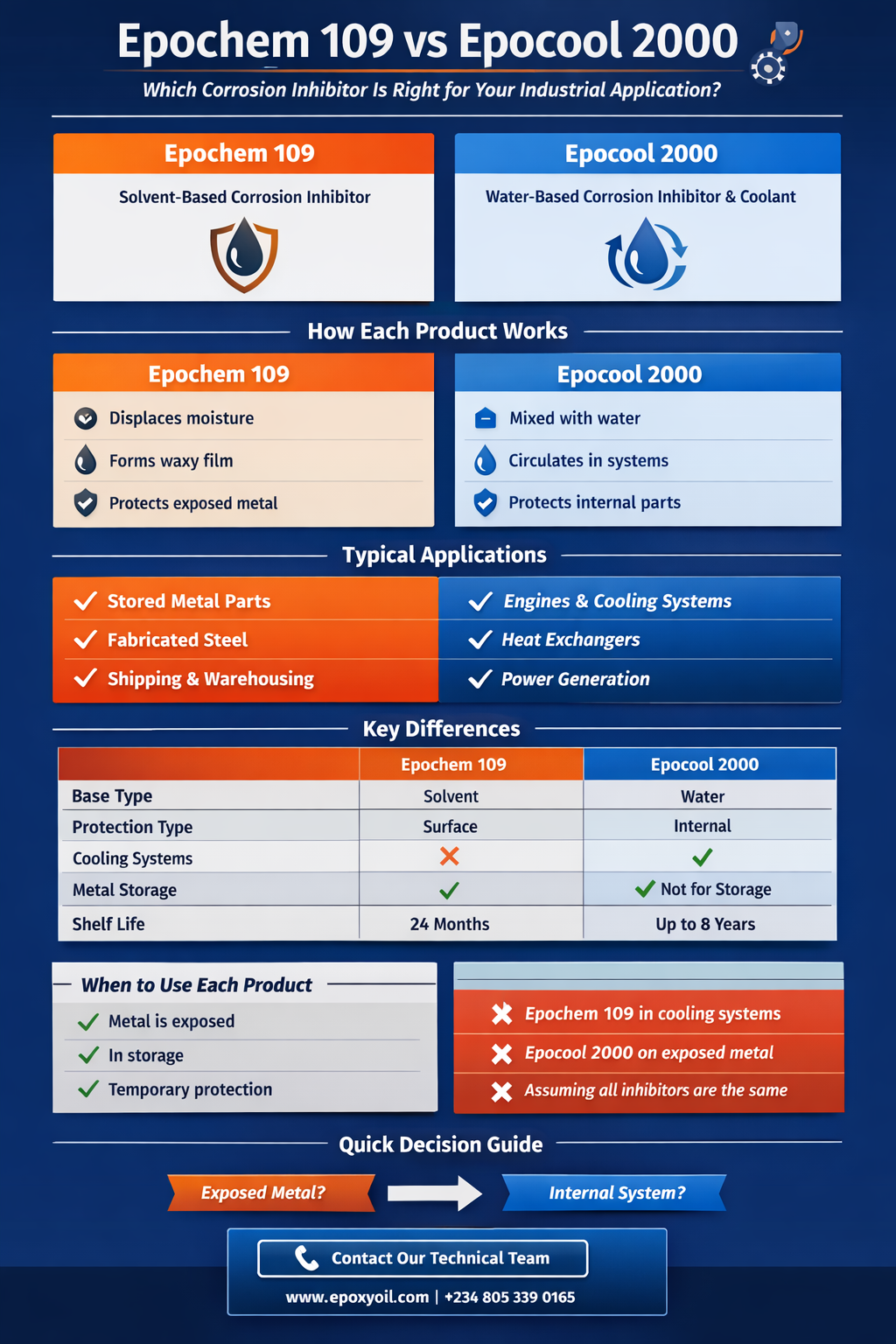
Key Differences Between Epochem 109 and Epocool 2000
| Feature | Epochem 109 | Epocool 2000 |
|---|---|---|
| Base Type | Solvent-based | Water-based |
| Protection Method | Surface film | Internal system |
| Moisture Displacement | Yes | No |
| Film Formation | Waxy coating | None |
| Cooling System Use | ❌ No | ✅ Yes |
| Metal Storage Protection | ✅ Yes | ❌ No |
| Removal Method | Cleaning solvent | System draining |
| Shelf Life | ~24 months | Up to 8 years |
When to Use Epochem 109
Choose Epochem 109 if:
-
Metal parts are exposed to air and humidity
-
Equipment will be stored or transported
-
Components are awaiting installation
-
Temporary corrosion protection is required
-
You need removable surface protection
Typical industries include fabrication, manufacturing, oil & gas logistics, and warehousing.
When to Use Epocool 2000
Choose Epocool 2000 if:
-
Corrosion risk exists inside pipes, engines, or cooling circuits
-
Heat transfer is required
-
Equipment operates continuously
-
Long-term system protection is needed
-
Mixed-metal systems are involved
It is widely used in power plants, engine rooms, industrial cooling systems, and mining operations.
Common Mistakes to Avoid
-
Using Epochem 109 inside cooling systems
-
Applying Epocool 2000 to exposed metal surfaces
-
Assuming all corrosion inhibitors are interchangeable
-
Ignoring manufacturer dilution ratios
-
Mixing inhibitors without compatibility checks
These mistakes often result in system failure or accelerated corrosion.
How to Choose the Right Corrosion Inhibitor
Ask these key questions:
-
Is the metal surface exposed or enclosed?
-
Will the inhibitor circulate in a system?
-
Is heat transfer involved?
-
Is the protection temporary or operational?
-
Is easy removal required?
Your answers will clearly indicate whether Epochem 109 or Epocool 2000 is the correct solution.
Conclusion: Two Products, Two Very Different Roles
Although both products are corrosion inhibitors, Epochem 109 and Epocool 2000 serve entirely different purposes:
-
Epochem 109 is best for surface protection and metal storage
-
Epocool 2000 is best for internal system corrosion protection and cooling
Using the right product ensures:
-
Longer equipment life
-
Reduced downtime
-
Lower maintenance costs
-
Improved operational safety
For industrial environments, correct corrosion inhibitor selection is not optional—it is essential.
Need help choosing the right corrosion inhibitor?
Contact a technical specialist to confirm compatibility, application method, and pricing for your specific operation call 08053390129.
Newest Guide & Blog Updates
Corrosion Inhibitors Explained for Oil & Gas Industry
Introduction Corrosion is one of the most expensive and dangerous challenges facing Nigeria’s oil &...
Lithium Grease in Nigeria: Types, Applications & Buying Guide for Industrial Use
Introduction Industrial machines, heavy equipment, vehicles, and factory systems across Nigeria depe...
Top Welding Machine Suppliers in Nigeria for Industrial Projects
Introduction Nigeria’s industrial sector continues to expand across construction, oil and gas, marin...
Welding Machines for Sale in Nigeria (2026) – Arc, Inverter & TIG Welders
Introduction In Nigeria’s fast-growing construction, fabrication, oil & gas, and maintenance sectors...

Where to Buy Epoxy Flooring Materials in Nigeria (Updated 2026 Guide)
Introduction Epoxy flooring has become a go-to solution for many industries in Nigeria due to its un...

GZ Industrial Supplies Moves Dei-Dei Abuja Showroom to Kubwa for Better Access to Contractors and Industrial Buyers
PRESS RELEASE Abuja, Nigeria – 4th January 2026 — GZ Industrial Supplies Ltd, a leading supplier of...