
Heavy-Duty Degreaser vs Solvent Degreaser: Which Is Right for Your Equipment?

Introduction
Oil, grease and stubborn industrial dirt can build up quickly on machinery, engines, tools and equipment. However, not every degreaser works in the same way.
Two common options used for industrial cleaning are heavy-duty degreasers and solvent degreasers.
While both are designed to remove oil and grease, their formulations, properties and suitable applications can differ.
In this guide, we compare heavy-duty degreasers vs solvent degreasers to help you understand which option may be more suitable for your equipment and cleaning application.
What is a Heavy-Duty Degreaser?
A heavy-duty degreaser is designed for demanding cleaning applications involving oil, grease and stubborn industrial dirt.
According to the available product safety data for EPOCHEM Heavy Duty Degreaser 502, the product is recommended as a general-purpose degreaser. It is a slightly viscous amber liquid with a solvent odour and is completely soluble in water.
The product data also indicates that the concentrated product has an approximate pH of 10.1, making it alkaline.
Heavy-duty degreasers may be useful for cleaning applications involving:
- Machinery
- Industrial equipment
- Workshop surfaces
- Metal components
- Heavy grease and oil buildup
The suitability of any degreaser depends on the product instructions, the surface being cleaned and the type of contamination.
What is a Solvent Degreaser?
A solvent degreaser is formulated to penetrate and remove oil and grease-bound dirt.
The available product information for EPOCHEM 530 Solvent Degreaser states that it is designed to meet requirements for oil and grease solvent cleaning while maintaining corrosion-inhibitor properties on metal and steel surfaces.
According to the product datasheet, EPOCHEM 530:
- Uses a solvent-based formulation to penetrate oil and grease-bound dirt.
- Contains an emulsifier that permits easier removal with water.
- Provides temporary corrosion protection due to its slow evaporation rate.
- Uses a low-volatility, low-flammability solvent formulation.
- Can be applied by spraying, brushing or swabbing before removal with water.
This makes solvent degreasers particularly relevant where penetrating oily and grease-bound dirt is an important part of the cleaning process.
Heavy-Duty Degreaser vs Solvent Degreaser: Key Differences
|
Feature |
Heavy-Duty Degreaser |
Solvent Degreaser |
|
Example Product |
EPOCHEM 502 |
EPOCHEM 530 |
|
Primary Use |
General-purpose degreasing |
Oil and grease solvent cleaning |
|
Appearance |
Amber, slightly viscous liquid |
Clear liquid |
|
Water Solubility |
Complete |
Negligible |
|
Cleaning Approach |
General-purpose degreasing |
Penetrates oil and grease-bound dirt |
|
Water Removal |
Product is completely soluble in water |
Contains an emulsifier for easier removal with water |
|
Corrosion Protection |
Not specifically stated in the provided datasheet |
Provides temporary corrosion protection |
|
Application Method |
Refer to product instructions |
Spraying, brushing or swabbing |
|
Key Consideration |
Irritating to eyes and skin |
Use according to recommended application |
The comparison above is based on the specific available datasheets for EPOCHEM 502 and EPOCHEM 530.
When Should You Choose a Heavy-Duty Degreaser?
A heavy-duty degreaser may be suitable when you need a general-purpose product for removing oil and grease from industrial surfaces and equipment.
Based on the EPOCHEM 502 safety data, you may consider this type of product for applications involving general degreasing where a product that is completely soluble in water is required.
Consider a heavy-duty degreaser when:
- You need a general-purpose degreaser.
- You are dealing with oil and grease buildup.
- A water-soluble cleaning product is suitable for your cleaning process.
- You require an alkaline cleaning formulation.
However, always confirm that the specific product is compatible with the surface and application before use.
When Should You Choose a Solvent Degreaser?
A solvent degreaser may be more suitable when you need a product designed to penetrate oil and grease-bound dirt.
According to the EPOCHEM 530 product information, it also provides temporary corrosion protection on metal and steel surfaces and can be removed with water after application.
Consider a solvent degreaser when:
- Oil and grease-bound dirt needs to be penetrated.
- You are cleaning metal or steel surfaces.
- Temporary corrosion protection is beneficial.
- You prefer application by spraying, brushing or swabbing.
- A low-volatility solvent formulation is preferred.
Comparing Cleaning Performance
The right degreaser is not simply about choosing the strongest product.
The best choice depends on:
- The type of oil or grease present
- How heavily contaminated the equipment is
- The surface material
- The cleaning process
- Whether water rinsing is available
- Whether corrosion protection is required
For example, if your cleaning process requires a general-purpose, water-soluble degreaser, a product such as EPOCHEM 502 Heavy Duty Degreaser may be considered.
If your main challenge is oil and grease-bound dirt on metal or steel surfaces and temporary corrosion protection is beneficial, EPOCHEM 530 Solvent Degreaser may be more appropriate based on its product information.
Which Degreaser is Better for Industrial Equipment?
There is no single degreaser that is best for every piece of industrial equipment.
The right choice depends on the cleaning application.
Choose a Heavy-Duty Degreaser if:
- You need general-purpose industrial degreasing.
- You require a water-soluble product.
- Your application involves oil and grease removal.
- An alkaline formulation is suitable for the cleaning process.
Choose a Solvent Degreaser if:
- You need to penetrate oil and grease-bound dirt.
- You are cleaning metal or steel surfaces.
- Temporary corrosion protection is important.
- You prefer spraying, brushing or swabbing as an application method.
Safety Considerations When Using Degreasers
Industrial degreasers should always be used according to the manufacturer's instructions and safety documentation.
The safety information for EPOCHEM 502 classifies the product as hazardous and indicates that it may irritate the eyes and skin. The datasheet recommends suitable gloves and eye or face protection and states that concentrated product handling may require a face shield, apron and chemical-resistant gloves.
The EPOCHEM 530 product information recommends avoiding prolonged skin contact and using impervious gloves. It also advises proper disposal through authorised collection points and refers users to the Material Safety Data Sheet for additional health and safety guidance.
General safety practices include:
- Read the product label and safety information before use.
- Wear appropriate PPE.
- Avoid unnecessary skin and eye contact.
- Use products in accordance with their recommended applications.
- Follow recommended disposal procedures.
For additional workplace chemical safety guidance, you can also refer to relevant occupational health and chemical safety authorities.
Frequently Asked Questions
What is the difference between a heavy-duty degreaser and a solvent degreaser?
A heavy-duty degreaser is a broad cleaning product designed for demanding oil and grease removal. A solvent degreaser uses a solvent-based formulation designed to penetrate and remove oil and grease-bound dirt.
The specific differences depend on the individual product formulation.
Which degreaser is better for heavy machinery?
The right choice depends on the type of contamination, the surface and the cleaning process.
A heavy-duty degreaser may be suitable for general-purpose degreasing, while a solvent degreaser may be considered where penetrating oil and grease-bound dirt is required.
Can solvent degreasers be used on metal?
The EPOCHEM 530 product information specifically states that it is formulated to maintain corrosion-inhibitor properties on metal and steel surfaces and provides temporary corrosion protection.
However, users should always confirm compatibility with specific materials before application.
Are heavy-duty degreasers water-soluble?
This depends on the product formulation.
The EPOCHEM 502 Heavy Duty Degreaser datasheet states that the product has complete solubility in water.
Can a solvent degreaser be removed with water?
According to the EPOCHEM 530 product information, it contains an emulsifier that permits easy removal with water.
Conclusion
Both heavy-duty and solvent degreasers can play an important role in industrial cleaning and equipment maintenance. The right choice depends on what you need to remove, the type of equipment you are cleaning and the cleaning process available.
Based on the available product information, EPOCHEM 502 Heavy Duty Degreaser is a general-purpose, alkaline and completely water-soluble degreaser suitable for oil and grease removal applications.
EPOCHEM 530 Solvent Degreaser is formulated to penetrate oil and grease-bound dirt, offers temporary corrosion protection on metal and steel surfaces, and can be applied by spraying, brushing or swabbing before removal with water.
Before selecting a product, always consider the contamination, surface material, cleaning method and the manufacturer's safety and application recommendations.
At GZ Industrial Supplies, you can explore industrial degreasers and cleaning solutions suitable for different equipment maintenance and cleaning applications.
Newest Guide & Blog Updates
Water Pump Troubleshooting: Common Issues and How to Resolve Them
Most water pump problems come down to five things: no power or low voltage, a pump that has lost it...

Epoxy Oilserv Announces Free Online Epoxy Flooring Training in Nigeria for October 2026
Epoxy Oilserv Nigeria Limited is set to host a free online introductory epoxy flooring training on S...
5 Signs Your Hydraulic Hose Needs Immediate Attention
Introduction A hydraulic hose may look like a simple component, but it plays an important role in ke...

How Much Does Epoxy Flooring Cost in Nigeria?
How Much Does Epoxy Flooring Cost in Nigeria? If you are planning to install epoxy flooring in a fac...
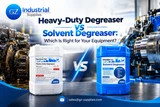
Heavy-Duty Degreaser vs Solvent Degreaser: Which Is Right for Your Equipment?
Introduction Oil, grease and stubborn industrial dirt can build up quickly on machinery, engines, to...
What Is an Industrial Degreaser? Types, Uses and How It Works
Introduction Industrial equipment, machinery, engines and production surfaces are often exposed to o...