
5 Signs Your Hydraulic Hose Needs Immediate Attention
Introduction
A hydraulic hose may look like a simple component, but it plays an important role in keeping hydraulic equipment operating. It carries pressurised hydraulic fluid between components such as pumps, valves, cylinders and motors, making the condition of the hose important to the performance and safety of the system.
The problem is that hydraulic hose damage can develop gradually. A small leak, worn outer cover or recurring failure may be an early indication that the hose or its assembly needs attention.
If you are considering hydraulic hose repair, here are five signs you should not ignore.
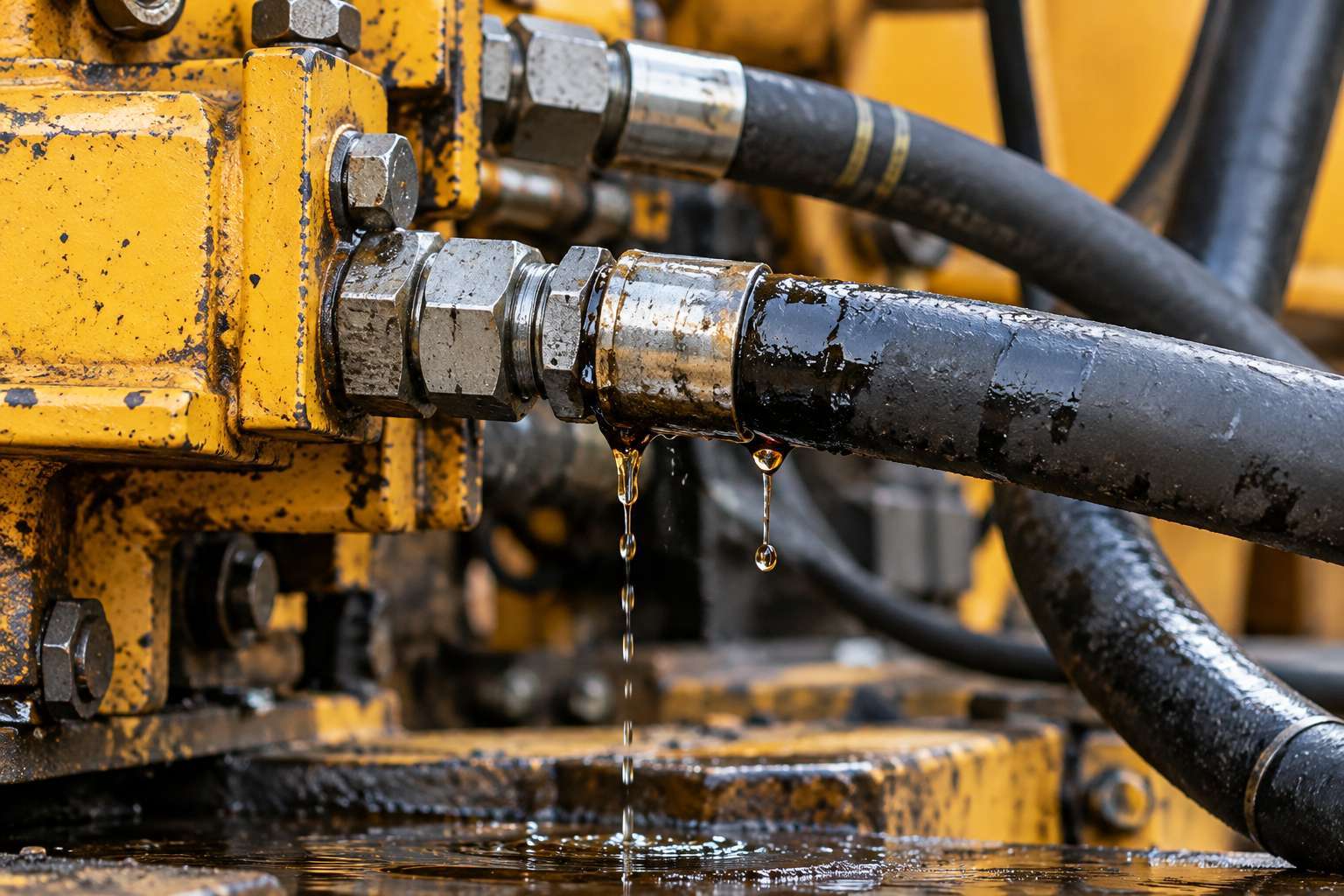
1. Hydraulic Fluid Leakage
One of the clearest signs that a hydraulic hose needs attention is fluid leakage.
You may notice hydraulic oil around the hose, fittings or connection points, or see fluid collecting underneath the equipment. Leakage can result from a damaged hose, deteriorated cover, fitting problem, incorrect assembly or another issue within the hose assembly.
Do not simply wipe away the fluid and continue operating the machine. The source of the leak should be identified first.
In some cases, a damaged fitting may be repairable or replaceable. If the hose body itself is damaged, replacement may be more appropriate than attempting to repair the connection.
2. Cracked or Deteriorated Hose Cover
Cracks in the outer cover are another warning sign.
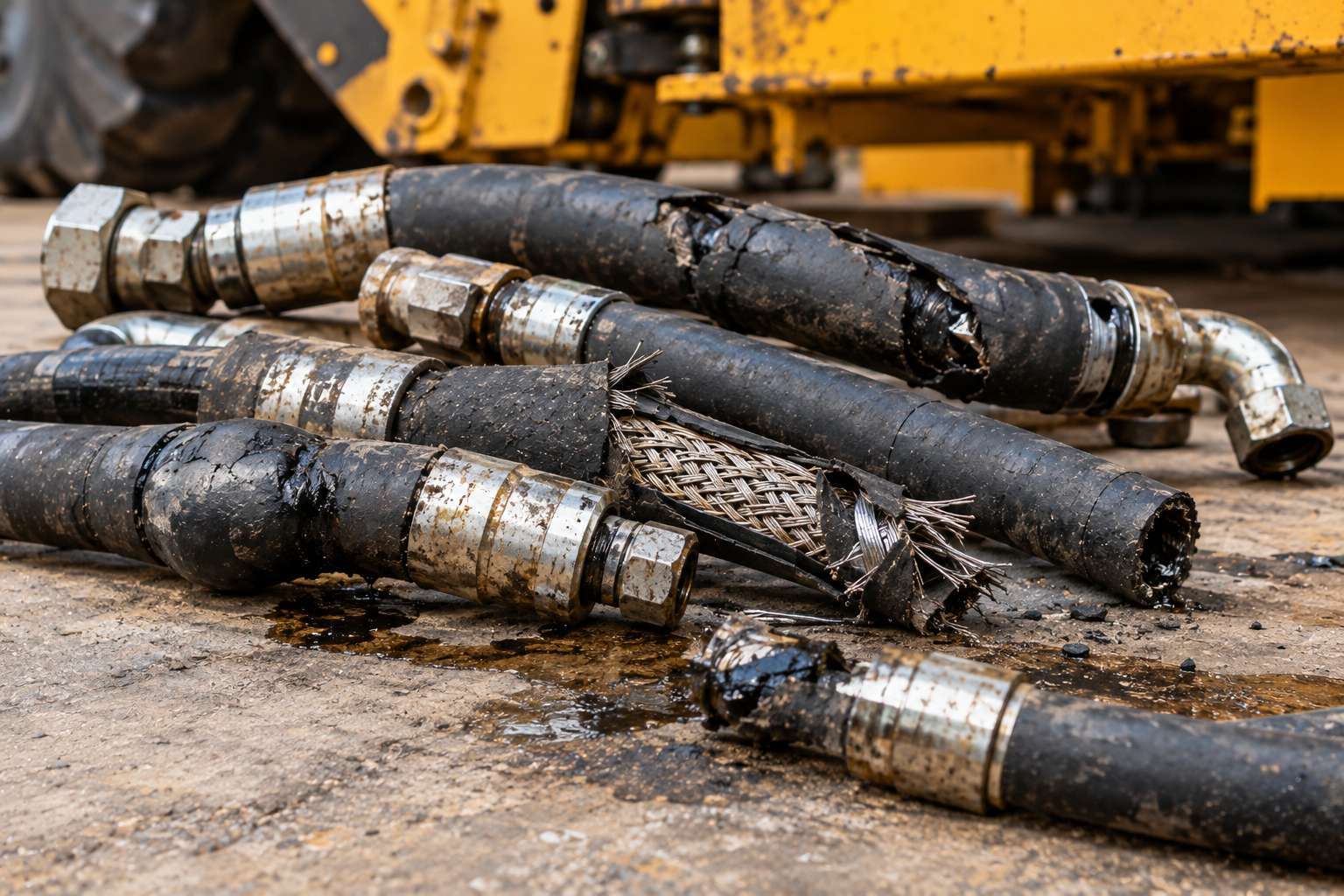
The outer cover protects the internal reinforcement and inner tube from environmental and mechanical damage. Cracking, deterioration or exposed reinforcement can indicate that the hose is no longer suitable for continued service.
Pay particular attention to hoses exposed to heat, chemicals, sunlight, constant movement or harsh working environments.
If you notice cracks, cuts or exposed reinforcement, have the hose inspected before the damage progresses.
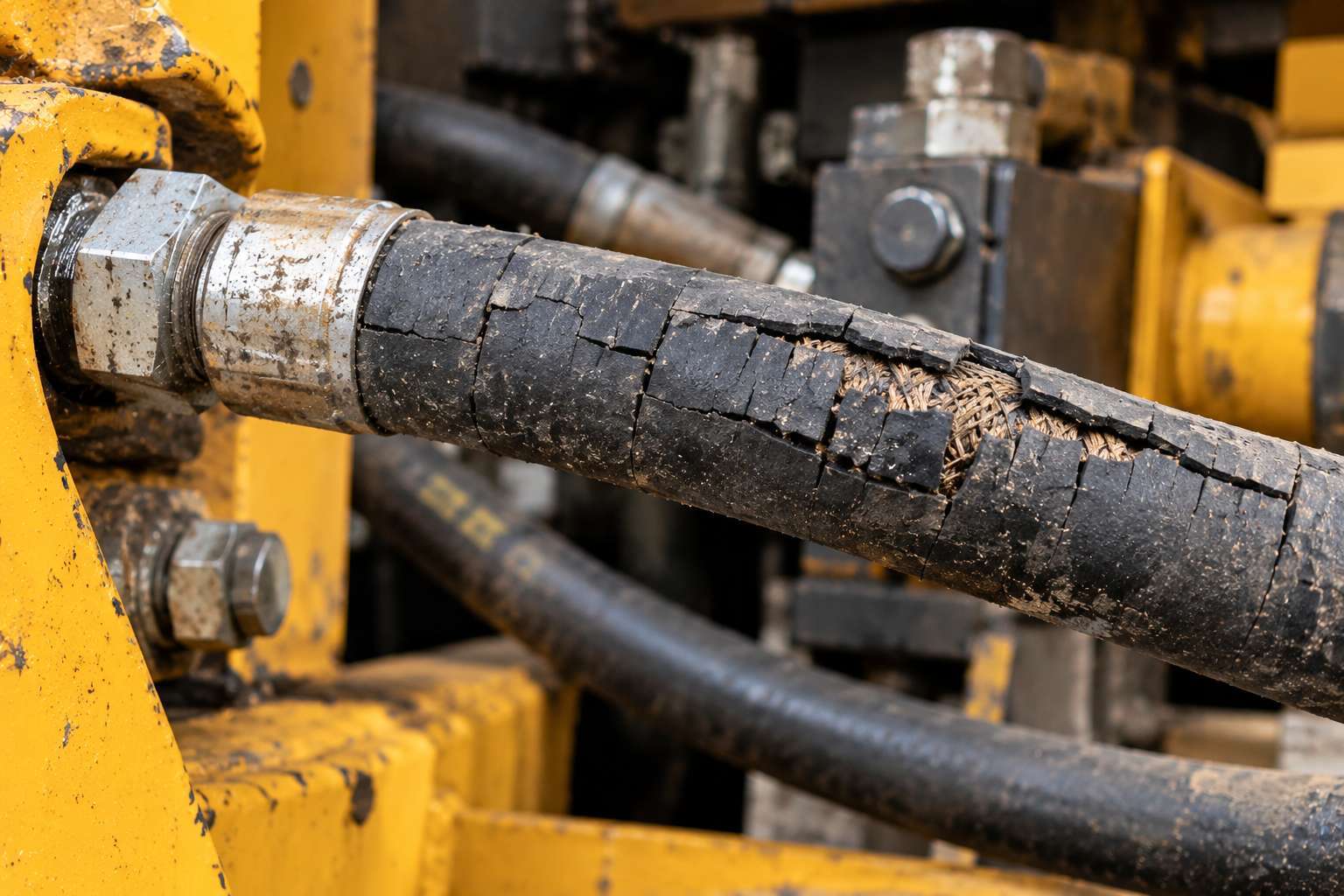
Cracks and deterioration on the outer cover can indicate that a hydraulic hose needs attention.
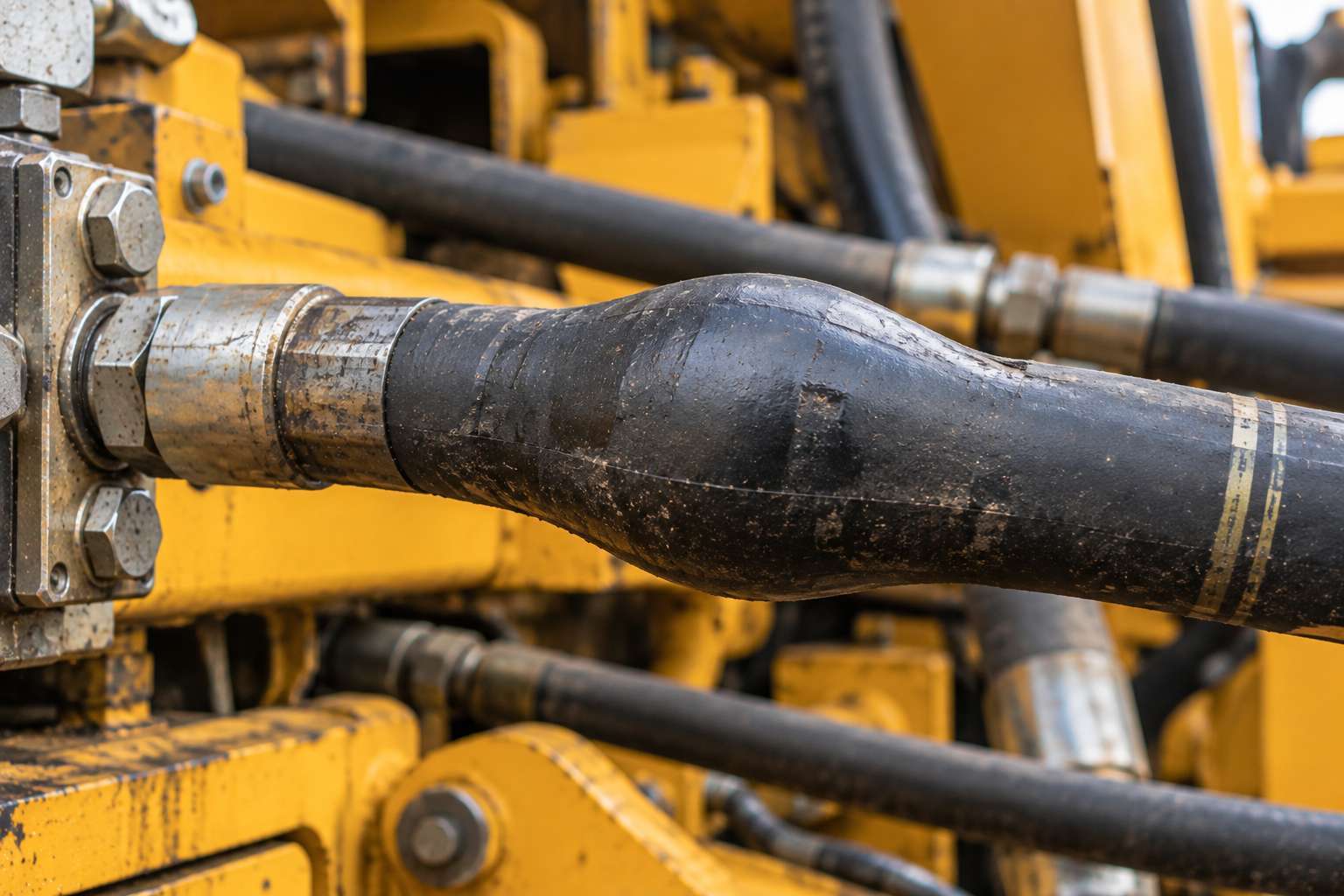
3. Bulging or Swelling
A hydraulic hose that develops a visible bulge or swelling should receive immediate attention.
Bulging can indicate that the hose structure has been compromised. It may also be a sign that the hose is not suitable for the operating conditions or that internal damage has occurred.
Do not assume that changing the fitting or re-crimping the hose will solve the problem. The condition of the hose body should be assessed before deciding whether the assembly needs repair, crimping, rebuilding or replacement.
If the hose is visibly swollen, stop treating it as a minor cosmetic issue and have it assessed.
4. Severe Abrasion or Visible Wear
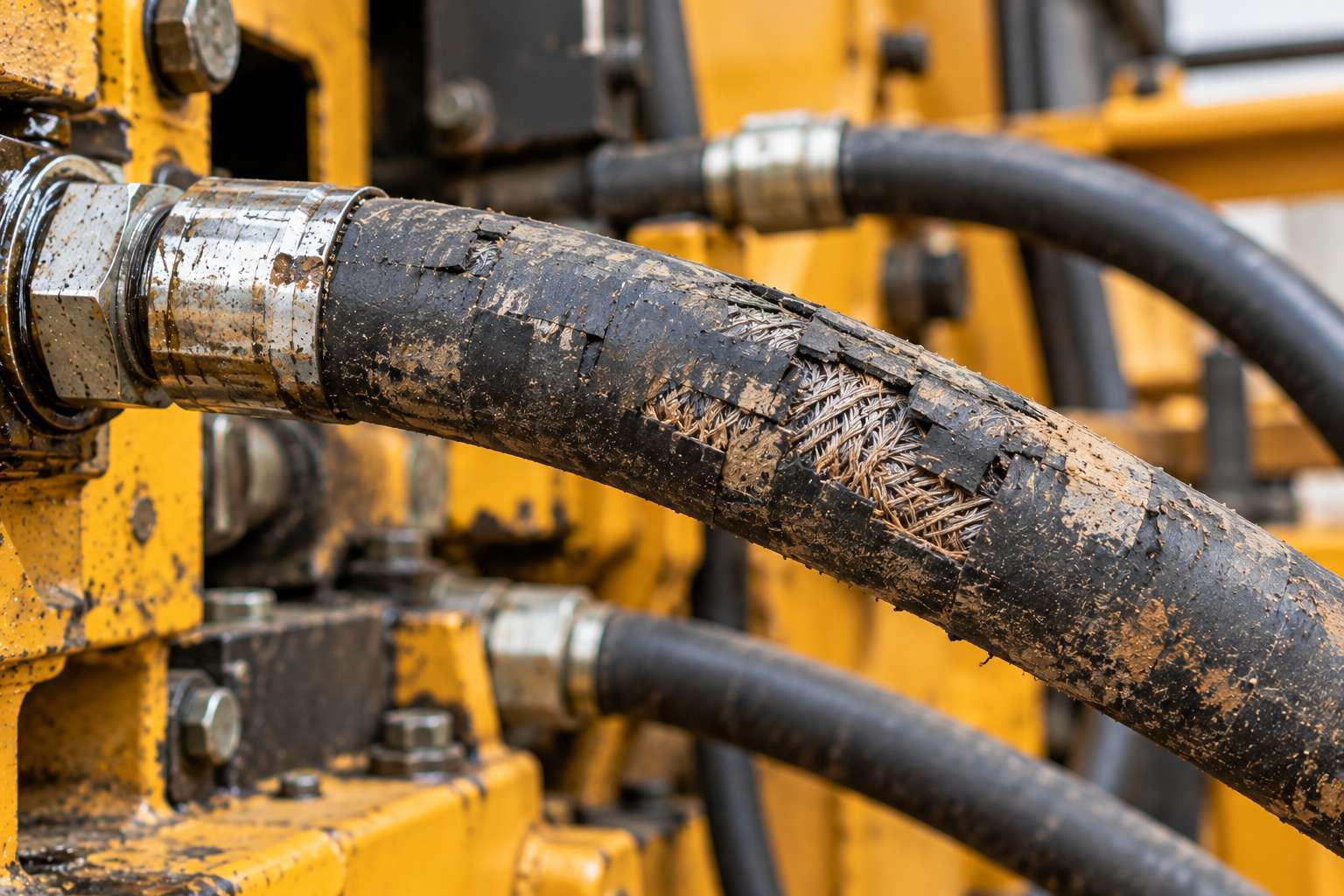
Hydraulic hoses can experience considerable movement and contact with surrounding equipment. Over time, this can cause abrasion on the outer cover.
Look for areas where the cover has become heavily worn, rubbed through or damaged. Severe abrasion can eventually expose the reinforcement beneath the cover and compromise the hose.
Incorrect routing, excessive movement, tight bend radius and contact with other equipment can contribute to premature hose failure.
Regular visual inspection can help identify this type of damage before it becomes a more serious problem.
If abrasion is already severe, hydraulic hose repair or replacement should be considered based on the actual condition of the hose.
5. The Same Hydraulic Hose Keeps Failing
Repeated hose failure is one of the most important signs that something needs to change.
If you keep replacing or repairing the same hose, simply installing another hose may not solve the underlying problem.
Repeated failures can be associated with factors such as:
- Incorrect hose selection
- Excessive pressure
- Excessive temperature
- Incorrect routing
- Tight bend radius
- Abrasion
- Mechanical movement
- Contamination
- Incorrect fittings
Repeated failures should be investigated rather than simply replacing the same hose without determining why it failed.
A proper assessment can help determine whether the problem is the hose itself, the fittings, the installation or the operating conditions.
Hydraulic Hose Repair or Replacement: Which Do You Need?
Not every damaged hydraulic hose needs the same solution.
A damaged fitting may sometimes be rebuilt or re-crimped if the hose remains suitable. However, serious damage to the hose body—including severe abrasion, cracking, exposed reinforcement, bulging or significant heat damage—may mean that replacement is the more appropriate option.
This is why inspection should come before deciding whether to repair, crimp, rebuild or replace a hydraulic hose.
If you're unsure whether a hose needs repair, crimping or replacement, read our guide to hydraulic hose repair vs crimping for a closer look at the differences between these options.
Where to Get Hydraulic Hose Repair in Nigeria
GZ Industrial Supplies provides hydraulic hose repair, rebuilding, crimping, testing and custom hose assembly solutions for industrial applications in Nigeria. Its hose service offering covers applications including construction, oil and gas, mining, marine, manufacturing and heavy equipment.
If you need help identifying the right solution for a damaged hose, you can explore GZ's hydraulic hose repair and services or browse the hydraulic hoses and couplings category for hydraulic hoses, fittings and related products.
Conclusion
A leaking, cracked, bulging or badly worn hydraulic hose should not be ignored. Repeated hose failures also deserve investigation because the underlying cause may be related to hose selection, installation, pressure, temperature, routing or another operating condition.
When you notice one of these warning signs, hydraulic hose repair should start with proper inspection. The right solution may be repair, crimping, rebuilding or complete hose replacement depending on the condition of the assembly.
Need help with a damaged hydraulic hose? Contact GZ Industrial Supplies for hose repair, crimping, rebuilding and replacement support in Nigeria.
Newest Guide & Blog Updates
5 Signs Your Hydraulic Hose Needs Immediate Attention
Introduction A hydraulic hose may look like a simple component, but it plays an important role in ke...

How Much Does Epoxy Flooring Cost in Nigeria?
How Much Does Epoxy Flooring Cost in Nigeria? If you are planning to install epoxy flooring in a fac...
Heavy-Duty Degreaser vs Solvent Degreaser: Which Is Right for Your Equipment?
Introduction Oil, grease and stubborn industrial dirt can build up quickly on machinery, engines, to...
What Is an Industrial Degreaser? Types, Uses and How It Works
Introduction Industrial equipment, machinery, engines and production surfaces are often exposed to o...

Industrial Equipment Required for Lekki Free Trade Zone Projects
INDUSTRIAL RESEARCH • LEKKI FREE ZONE • LAGOS Industrial Equipment Required for Lekki Free Zone...
Best Safety Equipment Suppliers in Lekki, Lagos
Best Safety Equipment Suppliers in Lekki, Lagos Looking for safety equipment suppliers in Lekki?...