
What Is an Industrial Degreaser? Types, Uses and How It Works
Introduction
Industrial equipment, machinery, engines and production surfaces are often exposed to oil, grease, dirt and other stubborn contaminants. Over time, these buildups can affect equipment performance, create safety concerns and make maintenance more difficult.
This is where an industrial degreaser becomes important.
Industrial degreasers are cleaning chemicals designed to break down and remove heavy grease, oil and other contaminants from machinery, equipment and industrial surfaces.They are part of a wider range of cleaning and maintenance products used across workshops, factories and industrial facilities. You can explore our full range of cleaning and maintenance chemicals for different industrial applications.
In this guide, we explain what an industrial degreaser is, the different types available, how they work and how to choose the right one for your application.
What is an Industrial Degreaser?
An industrial degreaser is a cleaning chemical formulated to remove grease, oil, lubricants, grime and other heavy contaminants from industrial equipment and surfaces.
Unlike regular household cleaners, industrial degreasers are designed for demanding cleaning applications involving:
-
Heavy machinery
-
Industrial equipment
-
Engines
-
Metal surfaces
-
Workshop tools
-
Manufacturing equipment
-
Mechanical components
Depending on the formulation, an industrial degreaser may be water-based, solvent-based, alkaline or designed for specialised cleaning applications.
The right choice depends on the type of grease, the surface being cleaned and the cleaning method being used.
How Does an Industrial Degreaser Work?
Industrial degreasers work by breaking down, loosening or dissolving oil and grease from a surface.
Oil and grease do not easily mix with water. Degreasers contain chemical ingredients that help separate these contaminants from the surface so they can be removed through:
-
Wiping
-
Scrubbing
-
Rinsing
-
Pressure washing
-
Soaking
The cleaning process depends on the type of degreaser being used.
For example, some degreasers emulsify grease so it can be washed away with water, while solvent-based degreasers dissolve oily contaminants.
The effectiveness of the degreaser may depend on factors such as:
-
Type of grease or oil
-
Surface material
-
Contact time
-
Temperature
-
Concentration
-
Cleaning method
Types of Industrial Degreasers
There are different types of industrial degreasers, and each is designed for specific cleaning applications.
1. Water-Based Degreasers
Water-based degreasers use water as the main carrier and may contain surfactants and other cleaning agents that help remove grease and oil.
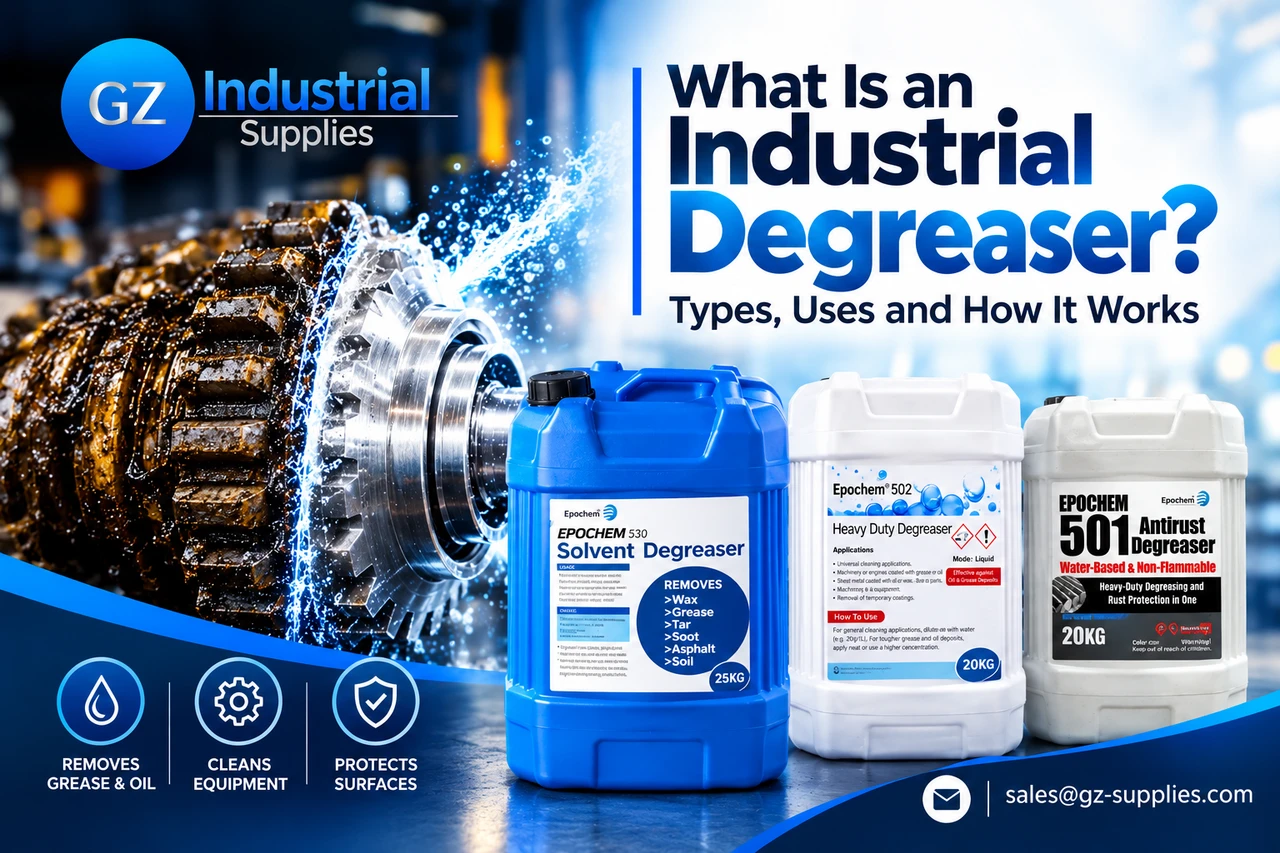
Water-based degreasers are commonly used where a water-rinsable cleaning solution is required. For example, Epochem 501 Antirust Degreaser is designed to remove heavy oil and grease while also providing rust-inhibiting protection on suitable metal surfaces.
They are commonly used for cleaning:
-
Machinery
-
Floors
-
Equipment
-
Workshop surfaces
-
Manufacturing areas
Best for:
-
General industrial cleaning
-
Water-rinsable applications
-
Regular equipment maintenance
Water-based degreasers are often selected where a water-rinsable cleaning process is preferred.
2. Solvent-Based Degreasers
Solvent-based degreasers are formulated to dissolve heavy oils, grease and other petroleum-based contaminants. For heavy oil and grease contamination, a solvent-based product such as Epochem 530 Solvent Degreaser may be suitable for specific industrial cleaning applications.
They are commonly used for cleaning:
-
Mechanical components
-
Metal parts
-
Engines
-
Tools
-
Equipment with heavy oil buildup
Best for:
-
Heavy grease
-
Oil-based contaminants
-
Mechanical components
Solvent degreasers can be particularly effective where water-based cleaners are unable to remove stubborn oily deposits.
Related product:
EPOCHEM 530 Standard Solvent Degreaser is designed for industrial degreasing applications.
Learn more about where to buy solvent degreasers in Nigeria and the applications they are commonly used for.
3. Heavy-Duty Industrial Degreasers
Heavy-duty degreasers are designed for more demanding cleaning applications involving thick grease, oil and industrial grime.
They may be used on:
-
Heavy machinery
-
Industrial equipment
-
Workshop equipment
-
Manufacturing surfaces
-
Mechanical systems
Best for:
-
Heavy grease buildup
-
Industrial equipment
-
Machinery maintenance
For particularly demanding applications, it is important to select a degreaser suitable for the surface and contaminant being cleaned. For more product options, see our guide to the top industrial cleaning chemicals in Nigeria, including heavy-duty degreasers and specialised cleaning products for different industries.
4. Alkaline Degreasers
Alkaline degreasers contain alkaline cleaning agents that help break down grease, oils and other contaminants. They are commonly used in industrial cleaning processes where heavy grease removal is required.
For heavy-duty alkaline cleaning applications, Epochem 130 Alkaline Cleaner is formulated for removing oils, grease, carbon deposits and industrial dirt.
Common applications include:
-
Industrial machinery
-
Manufacturing equipment
-
Metal cleaning
-
Workshop maintenance
Because different surfaces and materials may react differently to alkaline chemicals, always follow the product manufacturer's recommendations before use.
5. Citrus-Based Degreasers
Citrus-based degreasers are formulated using citrus-derived ingredients or citrus-based solvents.
They are commonly used for removing:
-
Grease
-
Oil
-
Adhesive residues
-
General industrial grime
They may be suitable for applications where an alternative to traditional petroleum-based solvents is preferred.
Common Uses of Industrial Degreasers
Industrial degreasers are used across many industries and maintenance operations.
1. Cleaning Industrial Machinery
Machinery can accumulate oil and grease during normal operation.
Regular cleaning can help maintenance teams inspect equipment more easily and remove excessive buildup.
Degreasers may be used on:
-
Machine exteriors
-
Mechanical components
-
Guards
-
Metal surfaces
2. Engine Cleaning
Engines and mechanical systems may accumulate:
-
Engine oil
-
Grease
-
Carbon-related grime
-
Dirt
An appropriate degreaser can help remove oily buildup before inspection or maintenance.
For heavy-duty applications, always select a cleaning product suitable for the equipment and materials involved.
3. Workshop Equipment Cleaning
Industrial and engineering workshops use degreasers to clean:
-
Tools
-
Workbenches
-
Metal components
-
Equipment
-
Mechanical parts
Removing grease can improve visibility during maintenance and help keep work areas cleaner.
4. Heavy Equipment Maintenance
Heavy equipment used in industries such as construction and manufacturing is frequently exposed to oil and grease.
Industrial degreasers can be used during scheduled maintenance to remove accumulated contaminants from suitable surfaces.
5. Metal Surface Preparation
Before certain maintenance, fabrication or coating processes, metal surfaces may need to be cleaned to remove oil and grease.
Degreasing helps prepare suitable surfaces for subsequent operations.
The correct cleaning chemical should be selected based on the surface material and the process that follows.
How to Choose the Right Industrial Degreaser
Choosing the right industrial degreaser depends on the specific cleaning application.
Here are important factors to consider.
1. Identify the Type of Contaminant
First, determine what you need to remove.
This may include:
-
Light oil
-
Heavy grease
-
Lubricants
-
Petroleum residues
-
Industrial grime
Different degreasers are designed to work with different types of contaminants.
2. Consider the Surface Material
Check what surface you are cleaning.
Examples include:
-
Steel
-
Aluminium
-
Plastic
-
Painted surfaces
-
Rubber components
Not every degreaser is suitable for every material.
Always check the product's technical information before applying it to sensitive surfaces.
3. Consider the Cleaning Method
How will the degreaser be applied?
Common methods include:
-
Spraying
-
Brushing
-
Wiping
-
Soaking
-
Pressure washing
Some degreasers are more suitable for specific cleaning processes.
4. Consider the Level of Grease Buildup
For light contamination, a general-purpose degreaser may be sufficient.
For heavy industrial grease and oil buildup, a heavy-duty or solvent-based degreaser may be more suitable.
5. Check Whether Rinsing Is Required
Some degreasers are designed to be rinsed with water, while others may require a different cleaning process.
Always follow the product instructions regarding:
-
Dilution
-
Application
-
Contact time
-
Rinsing
-
Disposal
Industrial Degreaser vs Household Degreaser
Industrial degreasers are designed for more demanding applications than many general household cleaning products.
| Industrial Degreaser | Household Degreaser |
|---|---|
| Designed for heavy-duty cleaning | Usually designed for lighter cleaning |
| Used on machinery and equipment | Used mainly on household surfaces |
| Suitable for industrial contaminants | Suitable for everyday grease |
| Available in specialised formulations | Usually general-purpose formulations |
The best choice depends on the application rather than simply choosing the strongest product.
Industrial Degreaser vs Solvent Degreaser
A solvent degreaser is a type of industrial degreaser.
Industrial degreaser is a broader category that can include:
-
Water-based degreasers
-
Solvent-based degreasers
-
Alkaline degreasers
-
Heavy-duty degreasers
-
Citrus-based degreasers
Solvent degreasers are typically chosen for applications involving heavy oils and petroleum-based contaminants.
Safety Tips When Using Industrial Degreasers
Industrial degreasers should always be handled according to the manufacturer's instructions and applicable workplace safety procedures.
General safety practices include:
-
Read the product label before use.
-
Use appropriate personal protective equipment (PPE).
-
Avoid unnecessary skin and eye contact.
-
Ensure adequate ventilation where required.
-
Do not mix cleaning chemicals unless specifically instructed.
-
Store products according to the manufacturer's recommendations.
-
Follow proper disposal procedures.
For detailed safety information, refer to the product's Safety Data Sheet (SDS) and technical documentation.
Frequently Asked Questions About Industrial Degreasers
What is an industrial degreaser used for?
Industrial degreasers are used to remove grease, oil, lubricants and heavy industrial grime from machinery, equipment, engines and other suitable surfaces.
What is the best industrial degreaser?
The best industrial degreaser depends on the application, type of contaminant and surface material.
A water-based degreaser may be suitable for general cleaning, while heavy-duty or solvent-based degreasers may be better suited for stubborn oil and grease.
Are industrial degreasers safe for metal?
Some industrial degreasers are formulated for use on metal surfaces, but compatibility depends on the specific product and material.
Always check the manufacturer's instructions before use.
What is the difference between a degreaser and a cleaner?
A cleaner is a broad term for products used to remove dirt and contaminants.
A degreaser is specifically designed to remove oil, grease and oily residues.
Can industrial degreasers be used on engines?
Some degreasers are suitable for engine cleaning, but the product should be selected based on the engine materials and manufacturer's instructions.
Choose the Right Industrial Degreaser for Your Application
Selecting the right industrial degreaser can make equipment cleaning and maintenance more effective.
Before choosing a product, consider:
-
What type of grease or oil you need to remove
-
The surface material
-
The level of contamination
-
The cleaning method
-
Whether rinsing is required
GZ Industrial Supplies provides industrial cleaning and maintenance solutions for workshops, factories, construction companies and industrial operations.
Looking for an industrial degreaser for your equipment or cleaning application?
Explore suitable industrial cleaning chemicals and degreasers from GZ Industrial Supplies or contact our team for assistance in selecting the right product for your application.
Conclusion
Industrial degreasers play an important role in removing oil, grease and stubborn contaminants from machinery, engines, workshop tools and industrial equipment. However, the right degreaser depends on the type of contamination, the surface being cleaned and the cleaning method required.
Whether you need a water-based, solvent-based, heavy-duty or specialised degreaser, choosing the right product can help improve cleaning efficiency and support proper equipment maintenance.
At GZ Industrial Supplies, we provide industrial cleaning chemicals and solutions for workshops, factories and industrial operations. Explore our range of industrial degreasers and cleaning products to find the right solution for your application.
Newest Guide & Blog Updates

Epoxy Oilserv Announces Free Online Epoxy Flooring Training in Nigeria for October 2026
Epoxy Oilserv Nigeria Limited is set to host a free online introductory epoxy flooring training on S...
5 Signs Your Hydraulic Hose Needs Immediate Attention
Introduction A hydraulic hose may look like a simple component, but it plays an important role in ke...

How Much Does Epoxy Flooring Cost in Nigeria?
How Much Does Epoxy Flooring Cost in Nigeria? If you are planning to install epoxy flooring in a fac...
Heavy-Duty Degreaser vs Solvent Degreaser: Which Is Right for Your Equipment?
Introduction Oil, grease and stubborn industrial dirt can build up quickly on machinery, engines, to...
What Is an Industrial Degreaser? Types, Uses and How It Works
Introduction Industrial equipment, machinery, engines and production surfaces are often exposed to o...

Industrial Equipment Required for Lekki Free Trade Zone Projects
INDUSTRIAL RESEARCH • LEKKI FREE ZONE • LAGOS Industrial Equipment Required for Lekki Free Zone...