
How Much Does Epoxy Flooring Cost in Nigeria?
How Much Does Epoxy Flooring Cost in Nigeria?
If you are planning to install epoxy flooring in a factory, warehouse, workshop, garage, commercial building or industrial facility, one of the first questions you may ask is:
How much does epoxy flooring cost in Nigeria?
There is no single price for every epoxy flooring project. The total cost depends on factors such as the size of the floor, condition of the concrete, thickness of the flooring system, surface preparation, materials, labour and the type of finish required.
To make the calculation easier to understand, let's use a 10 m² floor as a simple example.
How Much Does Epoxy Flooring Cost?
There are two different costs to consider:
-
Epoxy material cost
-
Complete epoxy flooring installation cost
The cost of resin and hardener is only one part of the total project cost.
A complete epoxy flooring installation may also include surface preparation, grinding, cleaning, epoxy mortar, primer, scratch coat, topcoat, self-leveling layers, labour and other project requirements.
Let's look at the material calculation first.
How Much Epoxy Is Needed for 10 m²?
At 2 mm thickness, the epoxy system has an approximate coverage of:
2 kg resin + 1 kg hardener = 3 kg mixed epoxy
This quantity covers approximately 1.5 m².
For a 10 m² floor, you would therefore need approximately:
| Material | Approximate Quantity |
|---|---|
| Epoxy resin | 13.33 kg |
| Epoxy hardener | 6.67 kg |
| Total mixed epoxy | 20 kg |
So, a 10 m² floor at 2 mm thickness requires approximately 20 kg of mixed epoxy material based on the stated coverage.
How Much Does the Epoxy Material Cost?
Using the current material prices:
-
Epoxy resin: ₦14,000 per kg
-
Epoxy hardener: ₦16,700 per kg
For a 10 m² floor:
Resin
13.33 kg × ₦14,000 = approximately ₦186,620
Hardener
6.67 kg × ₦16,700 = approximately ₦111,389
Total
Approximately ₦298,000
Therefore:
For a 10 m² floor at 2 mm thickness, the resin and hardener alone would cost approximately ₦298,000.
This is not the complete cost of installing the epoxy floor.
It is simply the estimated cost of the resin and hardener based on the stated coverage.
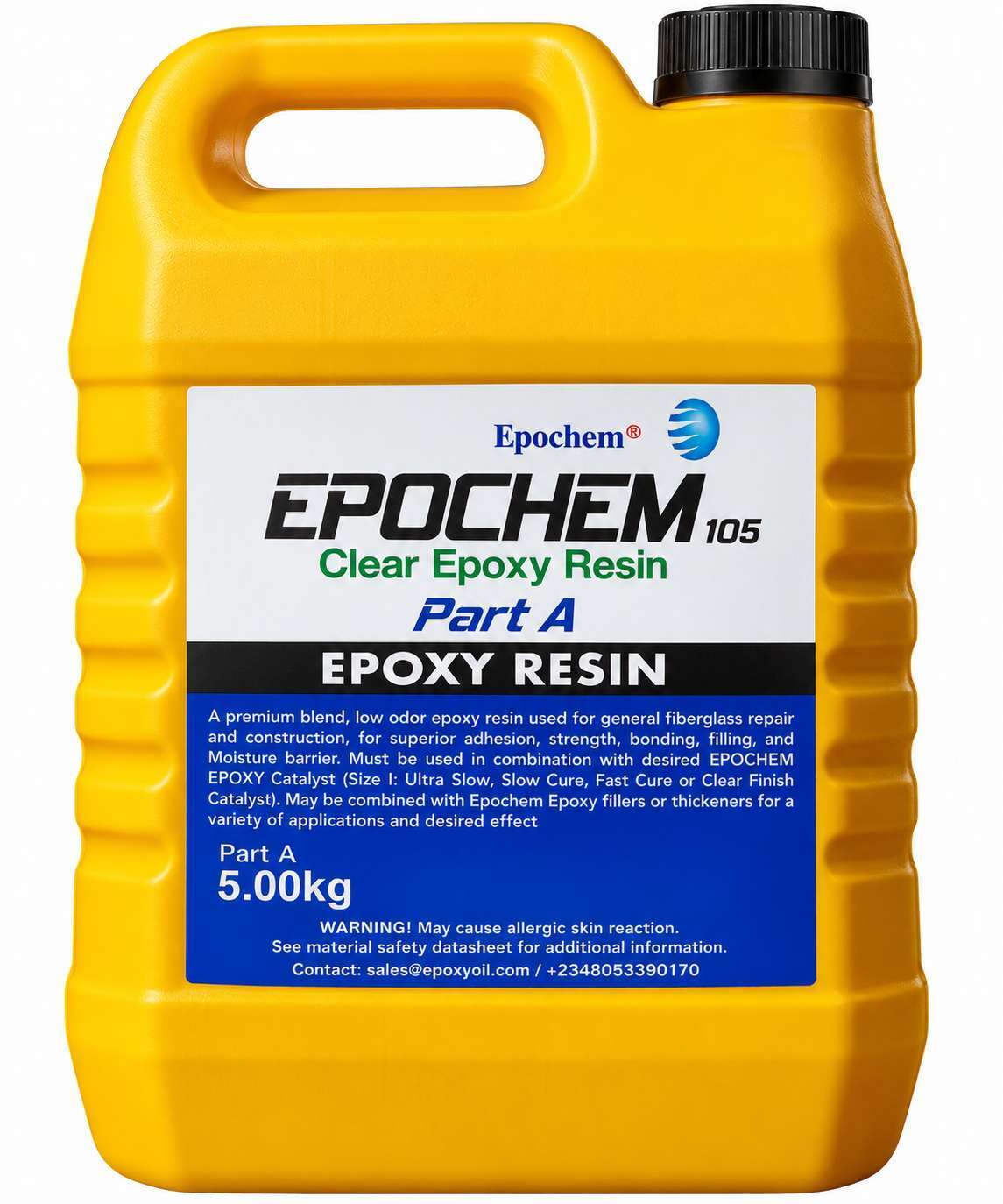
Epochem 105 Epoxy Resin
Epoxy resin suitable for concrete and polished concrete floor coatings, including industrial and commercial flooring applications.
2:1 Resin-to-Hardener Ratio
Available in Multiple Sizes
What Else is Included in Epoxy Flooring Cost?
A complete epoxy flooring project can involve several stages.
The exact requirements depend on the condition of the floor and the flooring system selected.
1. Surface Preparation
The existing concrete floor needs to be properly prepared before epoxy is applied.
Depending on the condition of the floor, this may include:
-
Grinding
-
Washing
-
Cleaning
-
Removing contaminants
-
Removing existing coatings
-
Surface preparation
-
Repairing damaged areas
Surface preparation is important because the condition of the concrete can affect how the flooring system performs.
2. Epoxy Mortar
Some flooring projects may require epoxy mortar as part of the system.
For example, a sample flooring quotation for a 120 m² project included surface preparation, grinding, washing and cleaning, together with the application of epoxy mortar at 3 mm thickness.
The required thickness and system should be determined according to the project requirements.
3. Epoxy Primer
An epoxy primer may form part of the flooring system before subsequent coating layers are applied.
The primer required will depend on the selected system and condition of the substrate.
4. Epoxy Scratch Coat
A scratch coat may also be included as part of the flooring system.
Its purpose and application will depend on the specified flooring system.
5. Epoxy Topcoat
The flooring system may require an epoxy topcoat to achieve the required finish and performance.
The number of coats and type of coating will affect the amount of material required and therefore the overall project cost.
6. Self-Leveling Epoxy
Some projects may require a self-leveling epoxy system.
A sample specification includes a 2 mm self-leveling epoxy topcoat, with the floor colour to be determined by the client.
Not every epoxy flooring project requires the same system.
Example of a Complete Epoxy Flooring Project
To understand the difference between material cost and complete installation cost, consider a 120 m² epoxy flooring project.
A sample quotation for this type of project was priced at:
₦38,000 per m²
For 120 m²:
120 × ₦38,000 = ₦4,560,000
Adding 7.5% VAT of ₦342,000 gives:
₦4,902,000 total
That works out to approximately:
₦40,850 per m² including VAT
This example demonstrates an important point:
The price of resin and hardener is not the same as the price of a completed epoxy flooring installation.
The complete project price can include preparation, materials, application and other work required to complete the floor.
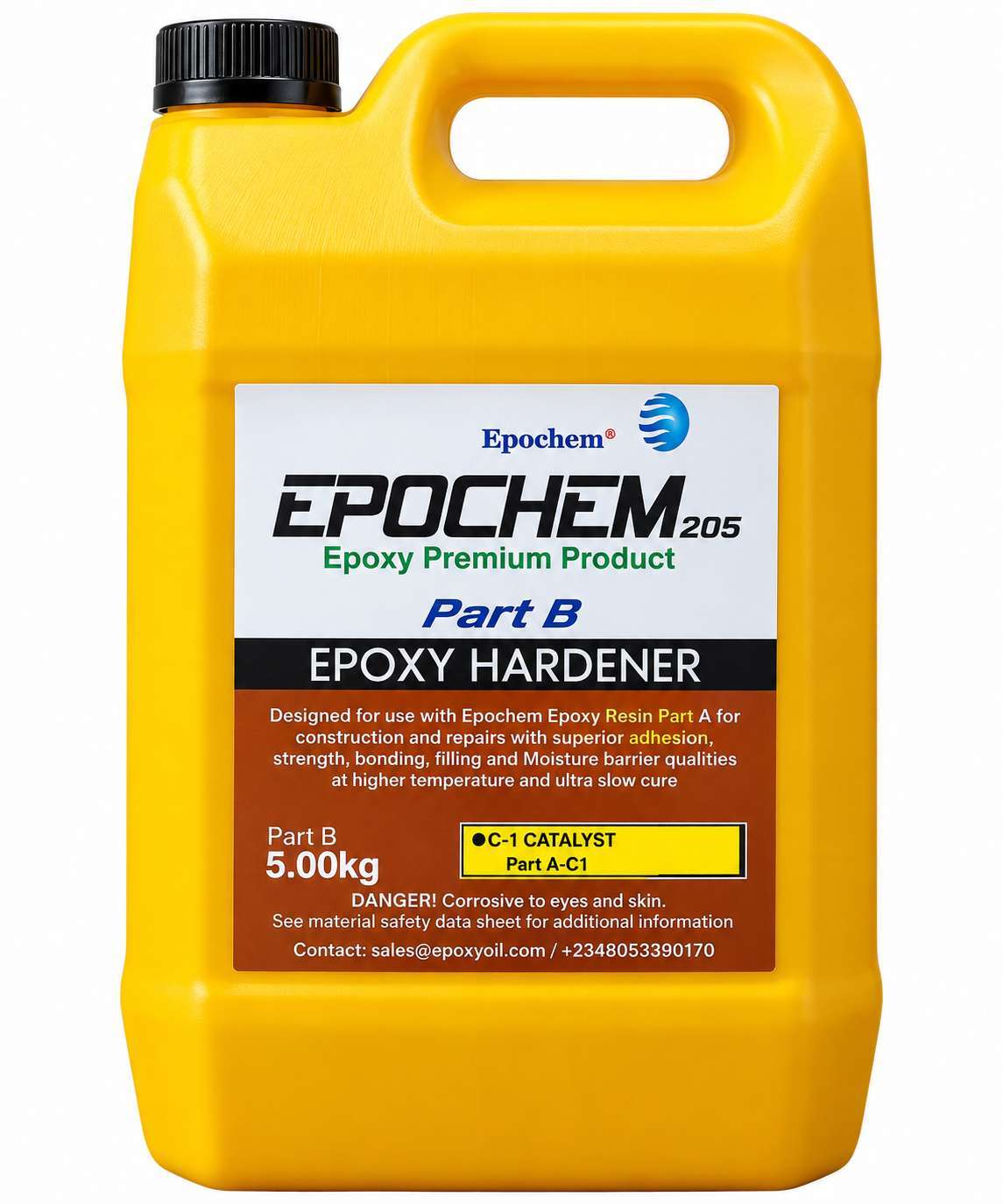
Epochem 205 Epoxy Hardener
Epoxy hardener designed for use with Epochem 105 resin in epoxy flooring and coating applications.
2:1 Resin-to-Hardener Ratio
Fast-Curing System
Why Does Epoxy Flooring Cost More Than the Resin?
When you see the price of epoxy resin, you may assume that you can simply multiply the price by the floor area.
It doesn't work that way.
A complete flooring project can involve:
-
Surface preparation
-
Grinding
-
Washing and cleaning
-
Repairs
-
Epoxy mortar
-
Primer
-
Scratch coat
-
Topcoat
-
Self-leveling epoxy
-
Labour
-
Application equipment
-
Transportation
-
Other site requirements
This is why the material price should not be confused with the complete installation price.
Not sure what your project will cost?
Tell us about your floor and get a project-specific assessment.
Request an AssessmentWhat Factors Affect Epoxy Flooring Cost in Nigeria?
1. Floor Area
The size of the floor determines how much material and installation work will be required.
A 10 m² floor will naturally require less material than a much larger warehouse or factory floor.
2. Condition of the Existing Floor
The condition of the concrete can have a significant effect on the final cost.
Additional preparation may be required if the floor has:
-
Cracks
-
Holes
-
Damaged areas
-
Oil contamination
-
Grease
-
Existing coatings
-
Uneven surfaces
-
Dirt or other contaminants
The worse the condition of the floor, the more preparation may be required before the epoxy can be applied.
3. Epoxy Thickness
Thickness directly affects material consumption.
Our example uses a 2 mm thickness.
If the required flooring system is thicker, more material will be needed.
4. Type of Flooring System
Not every facility requires the same type of epoxy flooring.
Requirements can vary depending on whether the floor is being installed in a:
-
Factory
-
Warehouse
-
Workshop
-
Garage
-
Showroom
-
Commercial building
-
Processing facility
-
Industrial facility
The expected traffic, operating conditions and desired finish should be considered when selecting the flooring system.
5. Surface Preparation
Surface preparation can significantly affect the project cost.
A relatively clean and suitable concrete floor may require less preparation than an old floor with contamination, cracks or existing coatings.
6. Number of Coating Stages
A flooring project may include several application stages depending on the specified system.
For example:
Primer → Epoxy mortar → Scratch coat → Topcoat → Self-leveling layer
Not every project will require all of these stages.
The final system should be determined according to the requirements of the facility.
Should You Compare Epoxy Flooring Prices Per Square Metre?
Yes, but don't compare the price alone.
If you receive two different quotations, check what each contractor has included.
Ask:
-
What thickness is included?
-
Is surface preparation included?
-
Is grinding included?
-
Are repairs included?
-
Is primer included?
-
Is epoxy mortar included?
-
How many coats are included?
-
Is the topcoat included?
-
Is VAT included?
-
Are transportation and mobilisation included?
For example, a quotation with a lower price per square metre may have a different scope of work from a higher quotation.
Always compare the specifications as well as the price.
How Much Would Epoxy Material Cost for 10 m²?
Let's keep the calculation simple.
For a 10 m² floor at 2 mm thickness:
Resin: 13.33 kg
Hardener: 6.67 kg
Total mixed epoxy: 20 kg
At the stated prices:
Resin: approximately ₦186,620
Hardener: approximately ₦111,389
Total material cost: approximately ₦298,000
Remember, this covers the estimated resin and hardener only.
The final installation cost will depend on the complete flooring system and site requirements.
What Should You Provide When Requesting an Epoxy Flooring Quote?
To receive a more accurate quotation, provide:
1. Floor Area
Tell the contractor approximately how many square metres need to be covered.
2. Location
Provide the location of the project.
3. Type of Facility
For example:
-
Factory
-
Warehouse
-
Workshop
-
Garage
-
Showroom
-
Commercial building
-
Industrial facility
4. Floor Condition
Explain whether the concrete is:
-
New
-
Old
-
Cracked
-
Damaged
-
Contaminated
-
Previously coated
5. Expected Traffic
Mention whether the floor will be exposed to:
-
Foot traffic
-
Vehicles
-
Forklifts
-
Heavy equipment
6. Desired Finish
You can also specify your preferred colour and finish.
Providing photographs of the existing floor can also help with an initial assessment.
Is Epoxy Flooring Worth the Cost?
Epoxy flooring can be a practical flooring solution for many commercial and industrial environments.
It can provide a finished surface for areas such as:
-
Factories
-
Warehouses
-
Workshops
-
Garages
-
Commercial spaces
-
Industrial facilities
However, the appropriate flooring system depends on the requirements of the particular facility.
Instead of choosing a flooring system based only on the lowest price, consider:
The floor condition.
The required thickness.
The expected traffic.
The type of epoxy system.
The preparation required.
What is included in the quotation.
Get an Epoxy Flooring Quote
If you are planning an epoxy flooring project in Nigeria, provide the basic details of your project to get an appropriate quotation.
You should have your:
-
Floor area
-
Project location
-
Facility type
-
Floor condition
-
Expected usage
-
Desired finish
ready when making your enquiry.
Request an Epoxy Flooring Assessment
Frequently Asked Questions
How much does epoxy flooring cost in Nigeria?
There is no single price for every project. The final cost depends on the floor area, condition, thickness, flooring system, preparation, materials, labour and other project requirements.
How much does epoxy resin cost per kg in Nigeria?
For this calculation, the resin price is ₦14,000 per kg, while the hardener is ₦16,700 per kg.
How much epoxy do I need for 10 m²?
At 2 mm thickness and the stated coverage, approximately 20 kg of mixed epoxy is required.
This consists of approximately:
-
13.33 kg resin
-
6.67 kg hardener
How much does epoxy material cost for 10 m²?
Based on the stated material prices, approximately ₦298,000 is required for the resin and hardener for 10 m² at 2 mm thickness.
This does not include installation and other project costs.
Does surface preparation affect epoxy flooring cost?
Yes. Grinding, cleaning, repairs, removal of existing coatings and other preparation work can affect the final project cost.
Is epoxy flooring priced per square metre?
Epoxy flooring projects can be quoted using a price per square metre. However, the final rate depends on what is included in the flooring system and installation.
Is ₦38,000 per m² the standard price for epoxy flooring in Nigeria?
No. A price of ₦38,000/m² can be used as an example from a specific project quotation, but it should not be treated as a fixed nationwide price. A particular project's final price depends on its scope and requirements.
Can I get an epoxy flooring quotation before installation?
Yes. Providing the floor area, location, facility type, floor condition and project requirements can help the contractor determine the appropriate scope and prepare a quotation.
Ready to Get Your Epoxy Flooring Project Started?
Share your floor area, location and project requirements with our team.
Request an Epoxy Flooring QuoteNewest Guide & Blog Updates
How Much Does Epoxy Flooring Cost in Nigeria?
How Much Does Epoxy Flooring Cost in Nigeria? If you are planning to install epoxy flooring in a fac...
Heavy-Duty Degreaser vs Solvent Degreaser: Which Is Right for Your Equipment?
Introduction Oil, grease and stubborn industrial dirt can build up quickly on machinery, engines, to...
What Is an Industrial Degreaser? Types, Uses and How It Works
Introduction Industrial equipment, machinery, engines and production surfaces are often exposed to o...

Industrial Equipment Required for Lekki Free Trade Zone Projects
INDUSTRIAL RESEARCH • LEKKI FREE ZONE • LAGOS Industrial Equipment Required for Lekki Free Zone...

Best Safety Equipment Suppliers in Lekki, Lagos
Best Safety Equipment Suppliers in Lekki, Lagos Looking for safety equipment suppliers in Lekki?...
How Much Does Industrial Cleaning Cost in Nigeria?
Introduction If you're planning industrial cleaning in Nigeria, one of the first questions you'll pr...