
Hydraulic Hose Crimping Services in Nigeria: How the Process Works
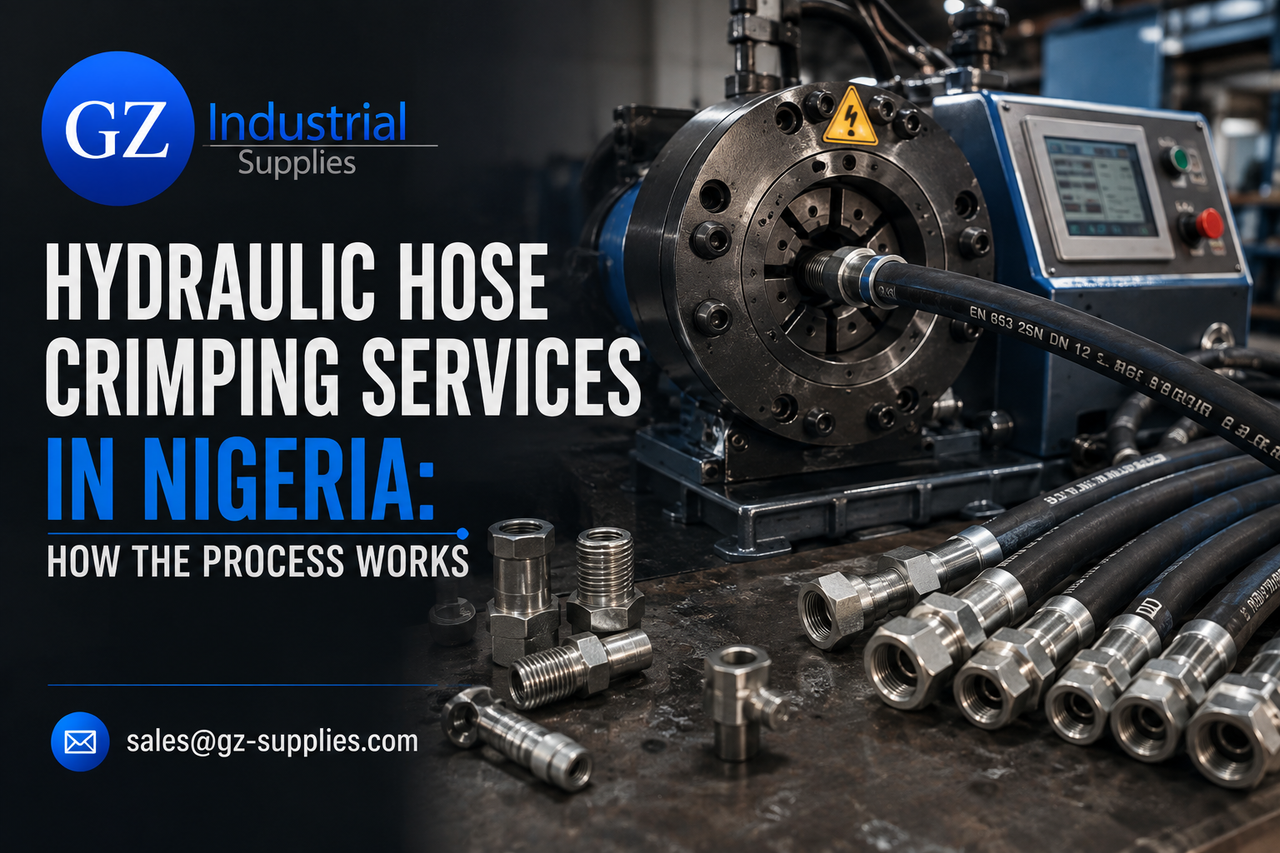
A hydraulic hose may look like a simple component, but it plays a critical role in keeping hydraulic equipment operating safely. When a hose needs to be assembled, repaired or replaced, proper crimping is essential for creating a secure connection between the hose and fitting.
For businesses searching for hydraulic hose crimping services in Nigeria, understanding the process can help you know what to expect and what information to provide when requesting a hose assembly.
Hydraulic Hose Crimping Services in Nigeria: How the Process Works
Learn how hydraulic hose crimping works, when a hose needs crimping or replacement, and what happens during professional hose assembly and testing.
Request Hose Crimping →Hydraulic hose crimping involves fitting the correct connector to a compatible hose and using a specialised crimping machine to secure the connection to the required specification. The finished assembly should then be inspected and, where required, tested before being put into service.
What Is Hydraulic Hose Crimping?
Hydraulic hose crimping is the process of permanently attaching a fitting to a hydraulic hose using a specialised crimping machine.
The machine compresses the fitting and ferrule around the hose to create a secure connection. The finished assembly needs to match the appropriate hose, fitting and crimp specifications rather than simply being judged by appearance.
A properly assembled hose can help reduce the risk of leaks, fitting separation and premature failure.
When Is Hose Crimping Needed?
Crimping is commonly required when:
- Building a new hydraulic hose assembly
- Replacing a damaged hose
- Replacing a damaged fitting
- Producing a custom-length hose
- Rebuilding hose assemblies
- Maintaining heavy equipment
- Preparing replacement hoses for industrial machinery
Not every damaged hose should simply be re-crimped. The condition of the hose, fitting compatibility, operating pressure and application should be assessed before deciding whether repair or replacement is appropriate.
1. Hose Inspection
The process starts with inspection.
The technician checks the hose for visible damage such as:
- Cracks
- Abrasion
- Bulging
- Kinking
- Exposed reinforcement
- Heat damage
- Contamination
- Damaged fittings
The hose's size, application, pressure requirements and condition should also be considered.
This step is important because fitting a new end onto a hose that is already badly damaged may not be an appropriate solution.
2. Hose and Fitting Selection
The correct hose and fitting combination must be selected for the application.
Hose size + pressure rating + fluid + temperature + fitting type + application
Using incompatible hose and fittings can result in leakage or premature failure.
GZ's hose service offering includes hydraulic hoses, fittings, couplings and custom hose assemblies for industrial applications.
Explore GZ Hose Sales & Services →3. Cutting the Hose
If a new assembly is being produced, the hose is cut to the required length.
A clean, square cut is important because a poorly prepared hose end can affect fitting insertion and the finished assembly.
4. Fitting Installation
The appropriate fitting is inserted into the hose according to the manufacturer's assembly requirements.
Depending on the hose and fitting system, additional preparation may be required.
The fitting must be correctly positioned before the hose enters the crimping machine.
5. Crimping
This is the stage most people associate with hose crimping.
The hose and fitting are positioned inside the appropriate die set of the crimping machine. The machine then applies controlled radial pressure around the fitting to achieve the required crimp.
The correct die size and crimp specification are critical. Incorrect die selection, calibration problems or mismatched hose and fitting combinations can affect the quality of the finished assembly.
A crimp that simply looks correct is not enough. The finished assembly should meet the applicable manufacturer's or assembly specification.
Read Crimping Machine Troubleshooting Guide →6. Inspection and Testing
After crimping, the finished assembly should be inspected.
Depending on the application and applicable requirements, checks can include:
- Crimp dimensions
- Fitting alignment
- Hose insertion
- Visual condition
- Leakage
- Pressure testing
Testing requirements vary according to the hose, assembly, application and applicable specifications. GZ's existing hose service offering includes leak testing and pressure validation as part of its hydraulic hose repair services.
Need Professional Hose Crimping & Testing?
Send GZ a photo of your hose, its size if known, the fitting details and the equipment it is used on.
Request Hose Crimping & Testing →When Is Hose Replacement Better?
Crimping is not automatically the right answer for every failed hose.
Replacement may be more appropriate when the hose has:
- Severe abrasion
- Cracked or deteriorated cover
- Exposed reinforcement
- Significant heat damage
- Structural damage
- Other conditions that make the hose unsuitable for continued service
If only the fitting is damaged and the hose remains suitable, rebuilding or crimping may be possible. The appropriate option should be determined after inspection.
Hydraulic Hose Crimping Services in Nigeria
GZ Industrial Supplies provides hose sales, hydraulic hose repair and rebuilding, crimping, testing and custom hose assembly solutions for industrial applications in Nigeria.
The service supports applications across sectors including:
If you need a hydraulic hose crimped, repaired or rebuilt, make your enquiry easier by providing:
- Hose photo
- Hose size, if known
- Fitting details, if known
- Equipment or machine name
- Your location
Need a Hydraulic Hose Crimped?
Don't wait until a leaking or damaged hose causes unnecessary equipment downtime.
Send GZ your hose details and let our team advise on the appropriate repair, crimping, rebuilding or replacement option.
Need to Crimp Hoses In-House?
If your workshop regularly produces or repairs hydraulic hose assemblies, a dedicated hose crimping machine may be a better long-term solution.
GZ supplies hydraulic hose crimping machines for workshop and industrial applications.
Shop Hose Crimping Machines →Frequently Asked Questions
How does hydraulic hose crimping work?
A compatible hose and fitting are selected, the hose is prepared and the fitting is positioned before a specialised crimping machine applies controlled pressure to secure the fitting to the hose.
Can every hydraulic hose be re-crimped?
No. The hose condition, construction, compatibility and application should be assessed first. A severely damaged or deteriorated hose may require replacement instead.
What should I send when requesting hose crimping?
A clear photo of the hose, hose size if known, fitting details, equipment name and your location can help the service team understand your requirement.
Does GZ provide hydraulic hose crimping in Nigeria?
GZ Industrial Supplies provides hydraulic hose repair, rebuilding, crimping, testing and custom hose assembly solutions for industrial applications in Nigeria.
Newest Guide & Blog Updates

Epoxy Oilserv Announces Free Online Epoxy Flooring Training in Nigeria for October 2026
Epoxy Oilserv Nigeria Limited is set to host a free online introductory epoxy flooring training on S...
5 Signs Your Hydraulic Hose Needs Immediate Attention
Introduction A hydraulic hose may look like a simple component, but it plays an important role in ke...

How Much Does Epoxy Flooring Cost in Nigeria?
How Much Does Epoxy Flooring Cost in Nigeria? If you are planning to install epoxy flooring in a fac...
Heavy-Duty Degreaser vs Solvent Degreaser: Which Is Right for Your Equipment?
Introduction Oil, grease and stubborn industrial dirt can build up quickly on machinery, engines, to...
What Is an Industrial Degreaser? Types, Uses and How It Works
Introduction Industrial equipment, machinery, engines and production surfaces are often exposed to o...
Industrial Equipment Required for Lekki Free Trade Zone Projects
INDUSTRIAL RESEARCH • LEKKI FREE ZONE • LAGOS Industrial Equipment Required for Lekki Free Zone...