
Hydraulic Hose Repair vs Crimping: Which One Does Your Hose Need?
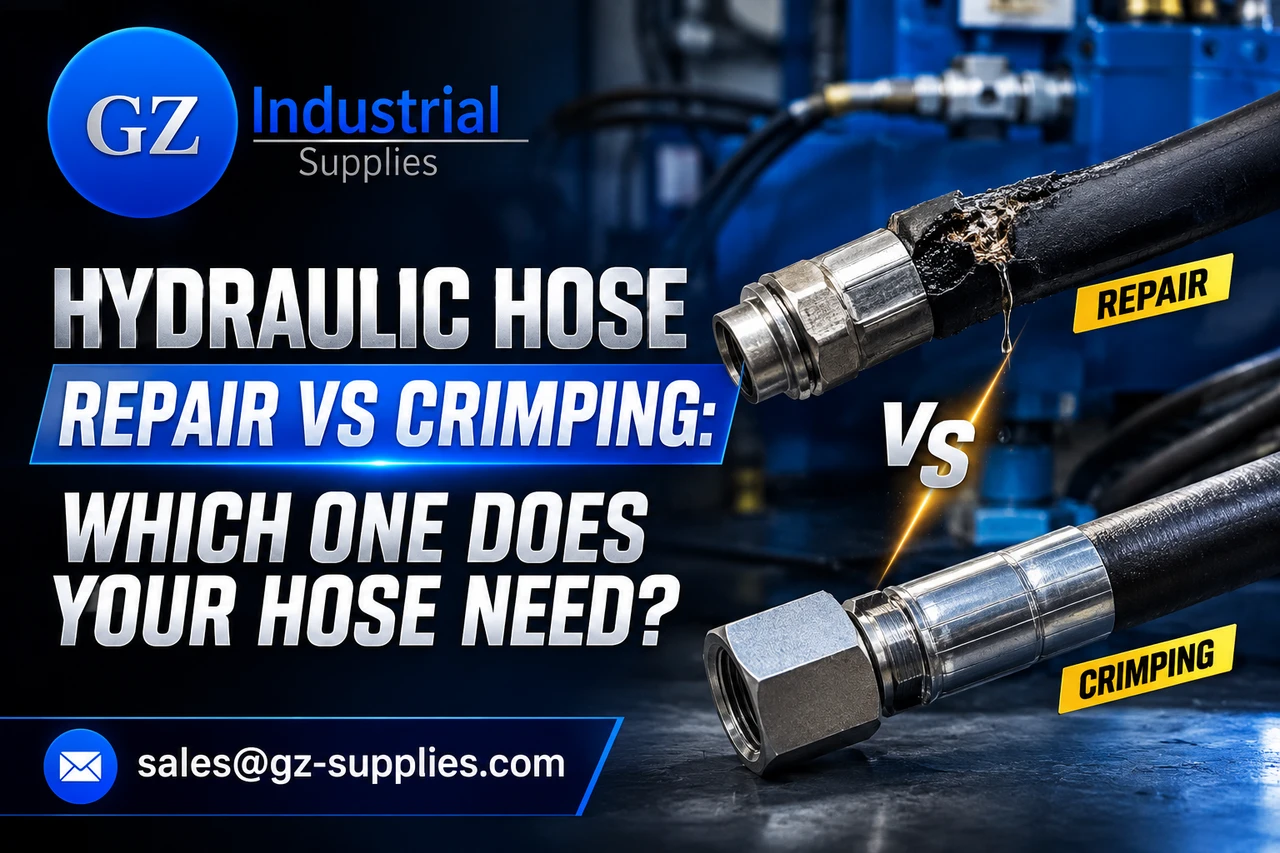
A damaged hydraulic hose does not always need to be replaced completely. In some cases, the hose can be rebuilt or re-crimped. In others, replacing the entire hose is the safer and more practical option.
The challenge is knowing which solution your hose actually needs.
For businesses looking for hydraulic hose repair services in Nigeria, the decision usually depends on where the damage occurred, the condition of the hose and the cause of the failure.
Hydraulic Hose Repair vs Crimping: Which One Does Your Hose Need?
Learn when a hydraulic hose should be repaired, crimped, rebuilt or replaced—and how to identify the right solution for your equipment.
Send GZ a Photo of Your Hose →Repair, Crimping or Replacement?
Here is a simple starting point:
| Problem | Possible Solution |
|---|---|
| Damaged fitting | Rebuild or crimp if suitable |
| Damaged hose body | Replacement |
| Fitting leak | Inspection, reassembly or replacement |
| Repeated failure | Root-cause assessment |
| Unknown damage | Professional inspection |
The important point is that crimping is not the same as repairing every type of hose damage.
Not Sure Whether Your Hose Needs Repair or Replacement?
Send GZ a clear photo of the hose and fittings. Include the equipment name and your location if available.
Send Hose Photo on WhatsApp →What Is Hydraulic Hose Repair?
Hydraulic hose repair refers broadly to restoring a hose assembly to a suitable working condition.
Depending on the problem, this may involve replacing a fitting, rebuilding an assembly, replacing the hose or addressing another component contributing to the failure.
A professional assessment should consider:
- Hose condition
- Fitting condition
- Hose size
- Working pressure
- Hydraulic fluid
- Operating temperature
- Application
- Cause of the failure
This helps prevent a situation where the same hose fails again shortly after the repair.
When Does a Hydraulic Hose Need Crimping?
Hydraulic hose crimping is primarily associated with securing a suitable fitting to a hose using a specialised crimping machine.
Crimping may be appropriate when the hose itself remains suitable but the fitting or hose end needs to be replaced, or when a new hose assembly needs to be produced.
Suitable hose → inspect → select compatible fitting → crimp → inspect/test
The correct hose, fitting and crimp specification are important. A connection should not simply be crimped because the components appear to fit.
When Does the Hose Need Replacement?
If the hose body itself is seriously damaged, replacement is usually the more appropriate option.
Signs that may indicate the hose should be replaced include:
- Severe abrasion
- Cracks or deterioration
- Exposed reinforcement
- Bulging
- Significant heat damage
- Kinking or structural damage
- Repeated failure of the same hose
A new fitting cannot correct damage that exists throughout the hose body.
This is why inspection should come before deciding whether to repair, crimp or replace.
For testing and performance evaluation of SAE 100R-series hydraulic hose assemblies, refer to SAE J343 .
What If the Fitting Is Leaking?
A leaking fitting does not automatically mean the entire hose is finished.
The connection should first be inspected to determine what is causing the leak.
Possible causes include:
- Damaged fitting
- Incorrect assembly
- Poor crimp
- Incorrect fitting selection
- Hose damage near the fitting
- Excessive movement or stress
Depending on the condition, the solution could involve reassembly, fitting replacement, rebuilding or complete hose replacement.
What If the Same Hose Keeps Failing?
Repeated hose failure is a warning sign.
Simply replacing the hose without investigating the cause may result in another failure.
The problem could be related to:
- Incorrect hose selection
- Excessive pressure
- Excessive temperature
- Incorrect routing
- Tight bend radius
- Abrasion
- Mechanical movement
- Contamination
- Incorrect fittings
In these situations, a root-cause assessment is more valuable than repeatedly replacing the same component.
What If You Don't Know What's Wrong?
This is one of the most common situations.
You may notice:
But that does not tell you whether you need a new hose, fitting repair, crimping or another solution.
If you are unsure, don't guess based only on appearance.
A professional inspection can help determine the condition of the hose and the appropriate next step.
Not Sure What Your Hose Needs?
Send GZ a clear photo of the hose and fittings. Include the machine or equipment name and your location if available.
Send Hose Photo on WhatsApp →Repair vs Crimping vs Replacement: Quick Guide
| Situation | What to Consider |
|---|---|
| Fitting damaged | Rebuild or crimp if the hose remains suitable |
| Hose end damaged | Inspect and consider fitting replacement |
| Hose body damaged | Replacement is generally the appropriate direction |
| Connection leaking | Inspect fitting, crimp and hose |
| Hose repeatedly fails | Investigate the root cause |
| Damage unclear | Professional inspection |
The objective is not simply to get the hose working again. It is to choose a solution that is appropriate for the hose, equipment and operating conditions.
For additional guidance on the selection, installation, replacement and maintenance of hydraulic hose assemblies, see ISO/TS 17165-2:2018: Hydraulic fluid power — Hose assemblies .
Hydraulic Hose Repair Services in Nigeria
GZ Industrial Supplies provides hose sales and service solutions for industrial applications, including hydraulic hose repair, rebuilding, crimping, testing and replacement support.
The service supports applications across sectors including:
What Should You Send GZ?
- A clear photo of the hose
- A photo of both fittings
- Hose size, if known
- Equipment or machine name
- Your location
- A brief description of the problem
Not Sure Whether You Need Repair or Replacement?
Send GZ a photo of your hose. Our team can review the available information and help determine whether the appropriate direction is repair, crimping, rebuilding or replacement.
Need More Hose Information?
Explore GZ Hose Sales & Services →Quick Takeaway
A damaged fitting does not always mean you need a new hose. A damaged hose body does not become safe simply because a new fitting is crimped onto it.
The right solution starts with inspection.
Newest Guide & Blog Updates

Epoxy Oilserv Announces Free Online Epoxy Flooring Training in Nigeria for October 2026
Epoxy Oilserv Nigeria Limited is set to host a free online introductory epoxy flooring training on S...
5 Signs Your Hydraulic Hose Needs Immediate Attention
Introduction A hydraulic hose may look like a simple component, but it plays an important role in ke...

How Much Does Epoxy Flooring Cost in Nigeria?
How Much Does Epoxy Flooring Cost in Nigeria? If you are planning to install epoxy flooring in a fac...
Heavy-Duty Degreaser vs Solvent Degreaser: Which Is Right for Your Equipment?
Introduction Oil, grease and stubborn industrial dirt can build up quickly on machinery, engines, to...
What Is an Industrial Degreaser? Types, Uses and How It Works
Introduction Industrial equipment, machinery, engines and production surfaces are often exposed to o...
Industrial Equipment Required for Lekki Free Trade Zone Projects
INDUSTRIAL RESEARCH • LEKKI FREE ZONE • LAGOS Industrial Equipment Required for Lekki Free Zone...