
Difference Between Commercial and Industrial Cleaning: A Complete 2026 Guide
Introduction
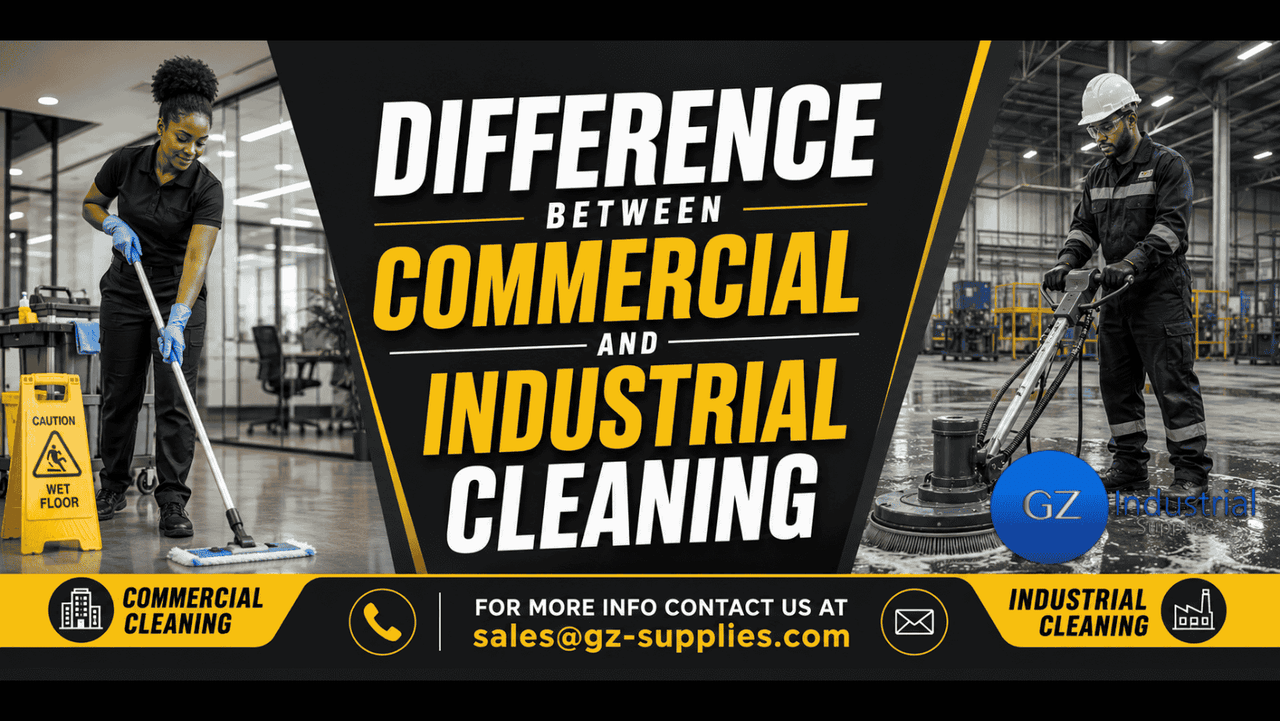
Industrial cleaning and commercial cleaning are often used interchangeably, but they are not the same. Choosing the wrong type of cleaning service can lead to safety risks, regulatory issues, equipment damage, and unnecessary costs.
Whether you manage a factory, warehouse, office complex, oil and gas facility, shopping mall, or manufacturing plant, understanding the difference between commercial and industrial cleaning is essential for maintaining a safe, productive, and compliant workplace.
In this guide, we'll explain the key differences between commercial and industrial cleaning, the industries they serve, the equipment and chemicals involved, and how to determine which service is right for your facility.
Contact us for Industrial Cleaning Services
What is Commercial Cleaning?
Commercial cleaning refers to the cleaning and maintenance of business premises that are regularly occupied by employees, customers, students, patients, or visitors.
The goal of commercial cleaning is to create a clean, hygienic, and professional environment that promotes health, comfort, and productivity.
Commercial cleaning services are commonly performed during off-hours, weekends, or after business operations have ended.
Typical Facilities That Require Commercial Cleaning
Commercial cleaning is commonly used in:
- Office buildings
- Banks
- Hotels
- Restaurants
- Schools and universities
- Hospitals and clinics
- Shopping malls
- Retail stores
- Government offices
- Religious centers
These facilities generally do not involve heavy machinery, hazardous chemicals, or industrial production processes.
Common Commercial Cleaning Services
Commercial cleaning companies typically provide:
Daily Cleaning
- Sweeping
- Mopping
- Dusting
- Trash removal
Floor Care
- Floor scrubbing
- Polishing
- Carpet cleaning
- Tile maintenance
Restroom Sanitation
- Disinfection
- Toilet cleaning
- Replenishing hygiene supplies
Window Cleaning
- Interior glass cleaning
- Exterior window maintenance
High-Touch Surface Disinfection
- Door handles
- Workstations
- Elevator buttons
- Reception areas
The emphasis is on appearance, hygiene, and occupant comfort rather than industrial process cleaning.
Equipment Used in Commercial Cleaning
Commercial cleaning generally relies on standard cleaning equipment such as:
- Vacuum cleaners
- Carpet extractors
- Floor polishers
- Floor scrubbers
- Mops and buckets
- Pressure sprayers
- Microfiber systems
These tools are designed for cleaning offices, public spaces, and commercial facilities efficiently without disrupting daily operations.
What Is Industrial Cleaning?
Industrial cleaning is a highly specialized cleaning service designed for manufacturing plants, factories, warehouses, oil and gas facilities, marine operations, power plants, and other industrial environments.
Unlike commercial cleaning, industrial cleaning often involves the removal of:
- Grease
- Oil residues
- Chemical contaminants
- Industrial waste
- Dust accumulation
- Production residues
- Hazardous materials
Industrial cleaning is not simply about making a facility look clean; it is about maintaining operational efficiency, worker safety, equipment reliability, and regulatory compliance.
Industries That Require Industrial Cleaning
Industrial cleaning is commonly used in:
Manufacturing Facilities
Production equipment, assembly lines, and factory floors require regular cleaning to prevent contamination and downtime.
Oil and Gas Facilities
Industrial cleaners remove hydrocarbons, drilling residues, grease, and process contaminants from equipment and work areas.
Marine and Offshore Operations
Ships, offshore platforms, and marine facilities require specialized cleaning to manage corrosion, salt deposits, fuel residues, and environmental contaminants.
Warehouses and Distribution Centers
Industrial cleaning helps maintain safety standards, reduce dust accumulation, and improve operational efficiency.
Power Plants
Industrial cleaning is essential for maintaining turbines, boilers, cooling systems, and electrical equipment.
Food Processing Plants
Cleaning procedures must meet strict sanitation requirements while preventing cross-contamination.
Common Industrial Cleaning Services
Industrial cleaning services often include:
- Equipment degreasing
- Machinery cleaning
- Tank cleaning
- Pipeline cleaning
- Industrial floor cleaning
- Pressure washing
- Steam cleaning
- Confined space cleaning
- Spill response cleaning
- Hazardous waste cleanup
Many of these tasks require specialized training and industrial-grade cleaning products.
Specialized Equipment Used in Industrial Cleaning
Industrial cleaning companies use heavy-duty equipment such as:
- High-pressure washers
- Industrial vacuum systems
- Air scrubbers
- Steam cleaning systems
- Abrasive blasting equipment
- Chemical dosing systems
- Water recovery systems
These tools are designed to remove contaminants that standard cleaning equipment cannot handle effectively.
Why Industrial Cleaning Requires Specialized Safety Standards
One of the biggest differences between commercial and industrial cleaning is the level of risk involved.
Industrial facilities often contain:
- Moving machinery
- Electrical systems
- Confined spaces
- Hazardous chemicals
- Elevated work areas
- High-temperature equipment
Because of these hazards, industrial cleaning personnel typically require specialized training in:
- Hazard communication
- Lockout/tagout procedures
- Personal protective equipment (PPE)
- Chemical handling
- Emergency response
Failure to follow proper cleaning procedures can result in injuries, environmental incidents, equipment damage, and costly production downtime.
Commercial Cleaning vs Industrial Cleaning
Although both services aim to maintain cleanliness, safety, and hygiene, the methods, equipment, risks, and expertise involved differ significantly.
|
Feature |
Commercial Cleaning |
Industrial Cleaning |
|
Primary Objective |
Clean and maintain public/business spaces |
Clean machinery, equipment, and industrial facilities |
|
Typical Facilities |
Offices, schools, hospitals, hotels |
Factories, warehouses, refineries, plants |
|
Risk Level |
Low |
Medium to High |
|
Cleaning Chemicals |
Standard disinfectants and detergents |
Degreasers, solvents, industrial cleaners |
|
Equipment Used |
Vacuum cleaners, floor scrubbers |
Pressure washers, steam cleaners, industrial vacuums |
|
Staff Training |
General cleaning procedures |
Specialized safety and technical training |
|
Safety Requirements |
Basic PPE |
Advanced PPE and compliance standards |
|
Cleaning Frequency |
Daily or weekly |
Scheduled maintenance shutdowns or operational cycles |
|
Cost |
Generally lower |
Higher due to specialized labor and equipment |
|
Regulatory Compliance |
General hygiene standards |
OSHA, HSE, environmental regulations |
Types of Facilities That Need Commercial Cleaning
Commercial cleaning is essential for businesses that serve employees, customers, patients, or visitors.
Office Buildings
Clean workspaces improve employee productivity and create a professional image.
Educational Institutions
Schools, colleges, and universities require routine cleaning to maintain healthy learning environments.
Healthcare Facilities
Hospitals and clinics depend on stringent cleaning protocols to reduce infection risks.
Retail Stores and Shopping Centers
A clean environment improves customer experience and brand perception.
Hotels and Hospitality Facilities
Guest satisfaction often depends on cleanliness and hygiene standards.
Financial Institutions
Banks and corporate offices use commercial cleaning services to maintain professional appearances.
Types of Facilities That Need Industrial Cleaning
Industrial cleaning serves facilities where production, manufacturing, storage, or processing activities occur.
Manufacturing Plants
Manufacturing facilities generate:
- Dust
- Metal shavings
- Lubricants
- Production residues
Regular industrial cleaning helps prevent equipment failure and contamination.
Oil and Gas Facilities
Industrial cleaning supports:
- Refineries
- Depots
- Offshore platforms
- Tank farms
Cleaning helps maintain safety and operational reliability.
Marine Facilities
Marine operations require cleaning of:
- Vessels
- Docks
- Offshore structures
- Cargo handling equipment
Warehouses
Warehouse cleaning improves:
- Inventory protection
- Worker safety
- Operational efficiency
Food Processing Facilities
Industrial cleaning helps maintain food safety compliance and product quality.
Power Generation Plants
Power facilities require cleaning of:
- Turbines
- Boilers
- Cooling systems
- Electrical equipment
Why Industrial Cleaning Requires Specialized Chemicals
One of the most important differences between commercial and industrial cleaning is the type of chemicals used.
Commercial cleaners are designed primarily for:
- Dust removal
- Surface cleaning
- Disinfection
- Appearance maintenance
Industrial cleaning chemicals are designed to remove difficult contaminants such as:
- Heavy grease
- Hydrocarbons
- Carbon deposits
- Corrosion
- Oil residues
- Chemical buildup
Common Industrial Cleaning Chemicals
Industrial Degreasers
Used for removing:
- Machinery grease
- Engine oil
- Hydraulic fluid contamination
Rig Wash Solutions
Used in:
- Offshore operations
- Marine maintenance
- Oil and gas facilities
Corrosion Inhibitors
Protect equipment and surfaces from rust and degradation.
Industrial Detergents
Provide heavy-duty cleaning without damaging sensitive equipment.
Solvent Cleaners
Remove stubborn contaminants that ordinary cleaning products cannot handle.
Benefits of Professional Industrial Cleaning
Many industrial companies view cleaning as an operational investment rather than an expense.
Improved Workplace Safety
Removing grease, oil, and debris reduces slip, trip, and fall hazards.
Reduced Equipment Downtime
Clean machinery operates more efficiently and experiences fewer breakdowns.
Regulatory Compliance
Industrial cleaning helps facilities comply with safety and environmental regulations.
Increased Equipment Life
Routine cleaning prevents corrosion, buildup, and premature equipment failure.
Better Production Efficiency
Clean production environments improve workflow and reduce interruptions.
Enhanced Corporate Reputation
A well-maintained facility demonstrates professionalism and operational excellence.
Benefits of Professional Commercial Cleaning
Commercial cleaning also provides significant business benefits.
Healthier Work Environment
Regular cleaning reduces bacteria, viruses, allergens, and dust.
Improved Employee Productivity
Employees perform better in clean, organized workspaces.
Better Customer Experience
Clean facilities create positive impressions and increase customer confidence.
Reduced Maintenance Costs
Routine cleaning helps preserve flooring, furniture, and fixtures.
Professional Appearance
Clean environments support brand image and customer trust.
Common Mistakes Businesses Make When Choosing Cleaning Services
Many organizations select cleaning contractors based solely on price.
This often leads to poor results.
Choosing the Cheapest Provider
Low-cost providers may lack equipment, experience, or safety training.
Using Commercial Cleaners for Industrial Facilities
Industrial facilities require specialized expertise and equipment.
Ignoring Safety Certifications
Always verify:
- Training records
- Insurance coverage
- Safety procedures
Not Evaluating Industry Experience
A company experienced in office cleaning may not be qualified for refinery cleaning.
Overlooking Equipment Capabilities
Industrial projects often require specialized equipment that many contractors do not possess.
How to Choose the Right Cleaning Service
Use this checklist when evaluating service providers:
- Industry experience
- Safety certifications
- Industrial equipment availability
- Trained personnel
- Insurance coverage
- References and case studies
- Emergency response capability
- Environmental compliance practices
The right cleaning partner should understand your facility, industry risks, and operational requirements.
The Best Industrial Cleaning Companies in Nigeria
|
Company |
Contact |
Address |
Core Strength |
|
Epoxy Oilserv Nigeria Limited |
08053390163 |
238 Aba Road, First Artillery by Fidelity Bank, Port Harcourt, Rivers State, Nigeria |
Industrial cleaning, oil & gas support, floor coating, maintenance chemicals |
|
Tikweld Products and Services |
08071993873 |
36 Baba Ponmile Street, off Mangoro Bus Stop, along Ikeja/Oshodi Expressway, Lagos 200311 |
Industrial cleaning chemicals, welding products, maintenance tools, facility support |
|
GZ Industrial Supplies |
08053390129 |
18 Adeshina Street, behind Holy Trinity Hospital, Ikeja, off Obafemi Awolowo Way, Ikeja, Lagos State, Nigeria |
Industrial cleaning chemicals, degreasers, tools, safety equipment, industrial supplies |
Industrial Cleaning Services in Nigeria
As Nigeria's manufacturing, oil and gas, marine, logistics, and construction sectors continue to expand, the demand for professional industrial cleaning services has increased significantly.
Industrial facilities across Lagos, Port Harcourt, Warri, Onitsha, Aba, Kano, Calabar, and Abuja require specialized cleaning solutions to maintain safety, improve productivity, and comply with industry regulations.
Oil and Gas Facilities
Nigeria's oil and gas industry relies heavily on industrial cleaning for:
- Tank cleaning
- Pipeline cleaning
- Offshore platform maintenance
- Rig cleaning
- Degreasing operations
Industrial cleaning helps prevent equipment failure and improves operational efficiency.
Manufacturing Plants
Factories require routine cleaning to:
- Remove production residues
- Prevent contamination
- Improve worker safety
- Reduce downtime
Marine and Offshore Operations
Marine facilities face unique challenges including:
- Salt corrosion
- Oil contamination
- Fuel residue accumulation
Specialized industrial cleaning chemicals and equipment help address these issues.
Warehouses and Logistics Centers
Industrial cleaning supports:
- Inventory protection
- Dust control
- Safer work environments
- Improved operational efficiency
Food and Beverage Processing Plants
Strict hygiene standards make industrial cleaning essential for:
- Product quality
- Food safety compliance
- Contamination prevention
Frequently Asked Questions
What is the main difference between commercial and industrial cleaning?
Commercial cleaning focuses on offices, schools, hospitals, hotels, and retail facilities, while industrial cleaning is designed for factories, warehouses, manufacturing plants, marine facilities, and oil and gas operations.
What industries require industrial cleaning?
Industries that commonly require industrial cleaning include:
- Manufacturing
- Oil and gas
- Marine
- Warehousing
- Food processing
- Power generation
- Construction
What chemicals are used in industrial cleaning?
Common industrial cleaning chemicals include:
- Industrial degreasers
- Solvent cleaners
- Corrosion inhibitors
- Rig wash chemicals
- Heavy-duty detergents
These products are designed to remove grease, oil, hydrocarbons, carbon deposits, and industrial contaminants.
How often should industrial facilities be cleaned?
Cleaning schedules vary depending on operations, but many facilities perform:
- Daily housekeeping
- Weekly maintenance cleaning
- Monthly deep cleaning
- Shutdown cleaning during maintenance periods
What equipment is used for industrial cleaning?
Industrial cleaning equipment commonly includes:
- High-pressure washers
- Industrial vacuum systems
- Steam cleaners
- Air scrubbers
- Water recovery systems
What are industrial degreasers used for?
Industrial degreasers remove:
- Oil residues
- Machinery grease
- Hydraulic fluids
- Industrial contaminants
They are widely used in manufacturing plants, workshops, marine operations, and oil and gas facilities.
Conclusion
Although commercial cleaning and industrial cleaning share the goal of maintaining clean and safe environments, they serve very different purposes.
Commercial cleaning focuses on offices, schools, hospitals, retail stores, and public facilities where appearance, hygiene, and occupant comfort are priorities.
Industrial cleaning, on the other hand, involves specialized cleaning of factories, warehouses, manufacturing plants, marine facilities, oil and gas operations, and industrial equipment where safety, compliance, and operational efficiency are critical.
Understanding these differences helps facility managers, procurement professionals, and business owners select the right cleaning service for their specific needs.
Choosing the correct cleaning solution not only improves cleanliness but also enhances worker safety, extends equipment life, reduces downtime, and improves overall business performance.
Contact Us Today
Phone: 08053390129
Email: sales@gz-supplies.com
Request a consultation or product recommendation today and discover how professional industrial cleaning solutions can improve safety, efficiency, and productivity at your facility.
Newest Guide & Blog Updates
Water Pump Troubleshooting: Common Issues and How to Resolve Them
Most water pump problems come down to five things: no power or low voltage, a pump that has lost it...

Epoxy Oilserv Announces Free Online Epoxy Flooring Training in Nigeria for October 2026
Epoxy Oilserv Nigeria Limited is set to host a free online introductory epoxy flooring training on S...
5 Signs Your Hydraulic Hose Needs Immediate Attention
Introduction A hydraulic hose may look like a simple component, but it plays an important role in ke...
How Much Does Epoxy Flooring Cost in Nigeria?
How Much Does Epoxy Flooring Cost in Nigeria? If you are planning to install epoxy flooring in a fac...
Heavy-Duty Degreaser vs Solvent Degreaser: Which Is Right for Your Equipment?
Introduction Oil, grease and stubborn industrial dirt can build up quickly on machinery, engines, to...
What Is an Industrial Degreaser? Types, Uses and How It Works
Introduction Industrial equipment, machinery, engines and production surfaces are often exposed to o...