
Industrial Cleaning Safety Standards: Best Practices, PPE & Compliance Guide for Nigerian Industries
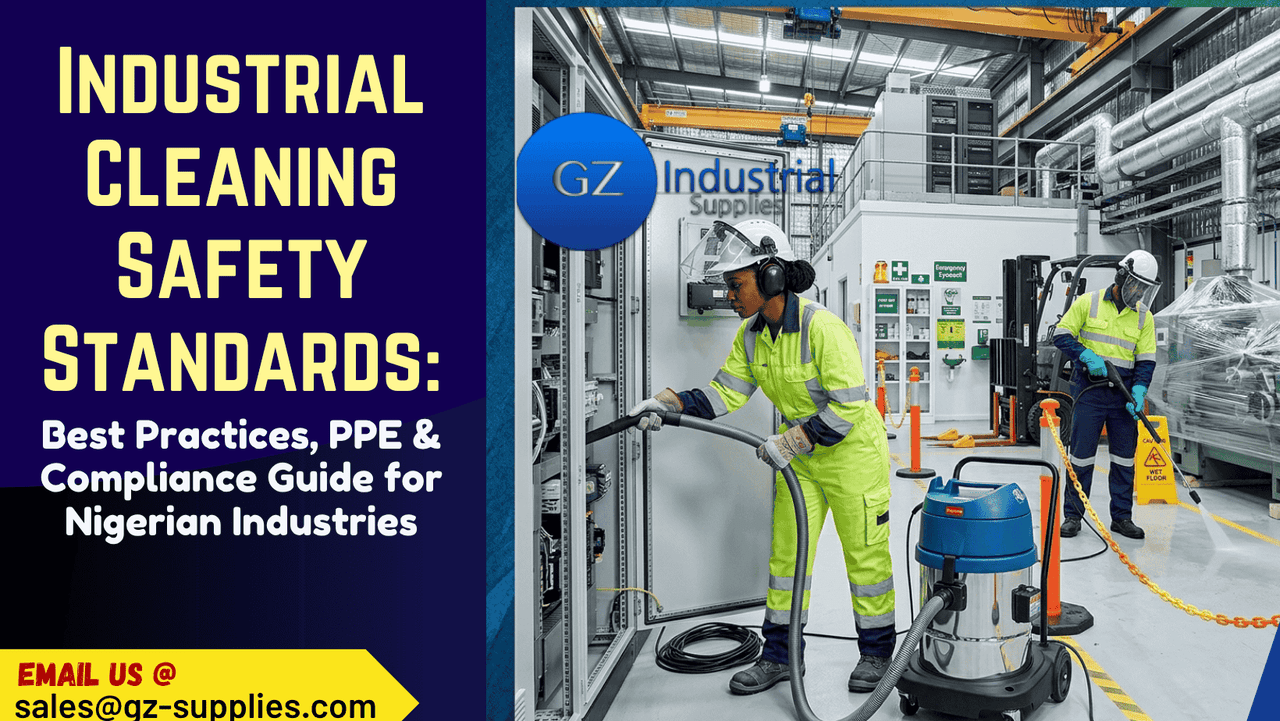
Introduction
Industrial cleaning environments are among the most hazardous workplaces due to exposure to chemicals, oil, grease, heavy machinery, confined spaces, slippery surfaces, and industrial waste. Without proper safety standards, industrial cleaning operations can result in injuries, equipment damage, environmental contamination, and regulatory violations.
For industries such as oil & gas, manufacturing, marine, warehousing, construction, and facility management, implementing industrial cleaning safety standards is critical for operational efficiency and worker protection.
Key Takeaway
Industrial cleaning safety standards help protect workers, equipment, and facilities from accidents, chemical exposure, and operational risks.
Proper PPE, chemical handling, hazard assessment, training, and compliance procedures are essential for safe industrial cleaning operations.
Businesses in Nigeria should follow internationally recognized industrial safety standards while using the correct industrial cleaning chemicals and equipment.
What Are Industrial Cleaning Safety Standards?
Industrial cleaning safety standards are the procedures, guidelines, protective measures, and regulatory practices used to ensure safe cleaning operations in industrial environments.
These standards help reduce risks associated with:
- hazardous chemicals
- oil and grease
- slippery surfaces
- confined spaces
- machinery cleaning
- pressure washing
- industrial waste
Industrial cleaning safety involves:
- PPE usage
- chemical handling
- equipment safety
- spill management
- worker training
- hazard assessment
- environmental protection
Why Industrial Cleaning Safety Is Important
Industrial cleaning operations often involve dangerous conditions that can lead to serious incidents if safety procedures are ignored.
1. Worker Protection
Proper safety standards reduce:
- chemical burns
- respiratory exposure
- slips and falls
- machinery accidents
2. Regulatory Compliance
Industries must comply with safety regulations and environmental standards to avoid:
- fines
- shutdowns
- legal liabilities
3. Equipment Protection
Using incorrect cleaning methods can damage:
- machinery
- pipelines
- metal surfaces
- electrical systems
4. Operational Efficiency
Safe and organized cleaning reduces downtime and improves productivity.
Common Hazards in Industrial Cleaning
Chemical Exposure
Industrial cleaners may contain:
- acids
- solvents
- degreasers
- disinfectants
Improper handling can cause:
- skin irritation
- burns
- respiratory problems
Slippery Surfaces
Oil, grease, and water increase the risk of slips and falls.
Confined Spaces
Tank cleaning and vessel cleaning may expose workers to:
- low oxygen levels
- toxic fumes
High-Pressure Equipment Risks
Pressure washers can cause:
- cuts
- injection injuries
- flying debris hazards
Electrical Hazards
Cleaning near electrical systems can result in electrocution if procedures are not followed.
PPE Requirements for Industrial Cleaning
Personal Protective Equipment (PPE) is mandatory in industrial cleaning operations.
Essential PPE
| PPE | Purpose |
|---|---|
| Safety goggles | Eye protection |
| Chemical-resistant gloves | Hand protection |
| Respirators | Protection from fumes |
| Safety boots | Slip and impact protection |
| Coveralls | Full-body protection |
| Face shields | Splash protection |
PPE Best Practices
- Inspect PPE before use
- Replace damaged equipment
- Train workers on proper use
- Match PPE to chemical hazards
Chemical Handling and Storage Standards
Proper handling of industrial cleaning chemicals is critical for safety.
Chemical Storage Guidelines
- Store chemicals in labeled containers
- Keep incompatible chemicals separated
- Use ventilated storage areas
- Follow manufacturer instructions
Safety Data Sheets (SDS)
Every industrial cleaning chemical should have an SDS containing:
- hazard information
- handling procedures
- emergency measures
- storage recommendations
Safe Chemical Application
Before using industrial cleaning chemicals:
- Read product instructions
- Wear proper PPE
- Ensure ventilation
- Avoid mixing incompatible chemicals
Explore industrial cleaning chemicals in Nigeria for safe and effective industrial applications.
Industrial Cleaning Risk Assessment Procedures
Risk assessment helps identify and control hazards before cleaning begins.
Step 1: Site Inspection
Identify:
- contamination type
- environmental hazards
- equipment risks
Step 2: Hazard Identification
Evaluate:
- chemical exposure
- fire risks
- confined space risks
Step 3: Control Measures
Implement:
- PPE
- ventilation
- warning signs
- spill control systems
Step 4: Emergency Planning
Prepare for:
- spills
- injuries
- fire outbreaks
OSHA and International Safety Standards
Industrial cleaning safety standards are guided by international organizations such as:
- OSHA (Occupational Safety and Health Administration)
- HSE (Health and Safety Executive)
- ISO safety standards
- EPA environmental standards
Important OSHA Guidelines
OSHA recommends:
- proper PPE
- hazard communication
- confined space safety
- chemical handling training
External Reference:
? OSHA Industrial Safety Guidelines
Marine and Offshore Cleaning Safety Standards
Marine and offshore operations involve additional risks due to:
- saltwater corrosion
- slippery decks
- hydrocarbon exposure
- confined spaces
Offshore Cleaning Safety Measures
- corrosion-resistant PPE
- spill containment systems
- emergency evacuation procedures
- ventilation monitoring
Read more about marine industrial cleaning for offshore operations.
Industrial Cleaning Equipment Safety
Industrial cleaning equipment must be operated correctly to prevent accidents.
Equipment Safety Tips
Pressure Washers
- Never point at people
- Use correct pressure settings
Vacuum Systems
- Ensure grounding where required
Chemical Sprayers
- Inspect hoses and nozzles regularly
Floor Scrubbers
- Use warning signs on wet floors
Emergency Response and Spill Management
Every industrial facility should have a spill response plan.
Spill Management Procedures
- Identify spill type
- Isolate area
- Wear PPE
- Contain spill
- Neutralize if necessary
- Dispose safely
Emergency Equipment
Facilities should have:
- spill kits
- fire extinguishers
- emergency showers
- first aid kits
Common Industrial Cleaning Safety Mistakes
- ignoring PPE requirements
- using wrong chemicals
- poor ventilation
- inadequate worker training
- improper chemical storage
- rushing cleaning procedures
Industrial Cleaning Safety Checklist
| Task | Status |
|---|---|
| PPE inspected | ✔ |
| SDS reviewed | ✔ |
| Spill kit available | ✔ |
| Equipment checked | ✔ |
| Hazard assessment completed | ✔ |
| Emergency exits accessible | ✔ |
Best Practices for Industrial Cleaning Compliance
Conduct Regular Training
Workers should receive ongoing safety education.
Use Approved Cleaning Chemicals
Only use industrial-grade products suitable for the environment.
Maintain Documentation
Keep records of:
- inspections
- incidents
- training
- chemical inventory
Schedule Preventive Maintenance
Maintain cleaning equipment regularly.
Related Resources
You may also find these useful:
- Industrial cleaning chemicals in Nigeria
- Heavy-duty degreasers
- Marine industrial cleaning
- Industrial maintenance solutions
- PPE and safety equipment
Industrial Cleaning Solutions in Nigeria
At GZ Industrial Supplies, we provide:
✔ industrial cleaning chemicals
✔ heavy-duty degreasers
✔ corrosion inhibitors
✔ cleaning equipment
✔ maintenance support solutions
Need Expert Recommendation?
Contact us today to:
- request industrial cleaning chemicals
- get bulk pricing
- receive product recommendations
- discuss industrial cleaning challenges
Chat with us on WhatsApp for immediate support.
Frequently Asked Questions
What are industrial cleaning safety standards?
They are procedures and guidelines designed to protect workers and facilities during industrial cleaning operations.
What PPE is required for industrial cleaning?
Common PPE includes gloves, goggles, respirators, coveralls, and safety boots.
Why is industrial cleaning safety important?
It helps prevent accidents, chemical exposure, and equipment damage.
What are common industrial cleaning hazards?
Chemical exposure, slippery surfaces, confined spaces, and equipment-related risks.
How do you handle industrial cleaning chemicals safely?
Store properly, use PPE, follow SDS instructions, and avoid incompatible chemical mixing.
Conclusion
Industrial cleaning safety standards are essential for protecting workers, maintaining operational efficiency, and ensuring compliance in industrial environments. From PPE and chemical handling to spill management and equipment safety, every aspect of industrial cleaning must be approached with proper planning and discipline.
For industries in Nigeria—especially oil & gas, marine, manufacturing, and facility maintenance—implementing strong industrial cleaning safety practices helps reduce downtime, improve productivity, and prevent costly incidents.
Choosing the right industrial cleaning chemicals, equipment, and safety procedures is critical for long-term operational success.
Newest Guide & Blog Updates

How Much Does Epoxy Flooring Cost in Nigeria?
How Much Does Epoxy Flooring Cost in Nigeria? If you are planning to install epoxy flooring in a fac...
Heavy-Duty Degreaser vs Solvent Degreaser: Which Is Right for Your Equipment?
Introduction Oil, grease and stubborn industrial dirt can build up quickly on machinery, engines, to...
What Is an Industrial Degreaser? Types, Uses and How It Works
Introduction Industrial equipment, machinery, engines and production surfaces are often exposed to o...

Industrial Equipment Required for Lekki Free Trade Zone Projects
INDUSTRIAL RESEARCH • LEKKI FREE ZONE • LAGOS Industrial Equipment Required for Lekki Free Zone...

Best Safety Equipment Suppliers in Lekki, Lagos
Best Safety Equipment Suppliers in Lekki, Lagos Looking for safety equipment suppliers in Lekki?...
How Much Does Industrial Cleaning Cost in Nigeria?
Introduction If you're planning industrial cleaning in Nigeria, one of the first questions you'll pr...